That Bird Dropping Can Wait Until the Weekend — Except It Can't
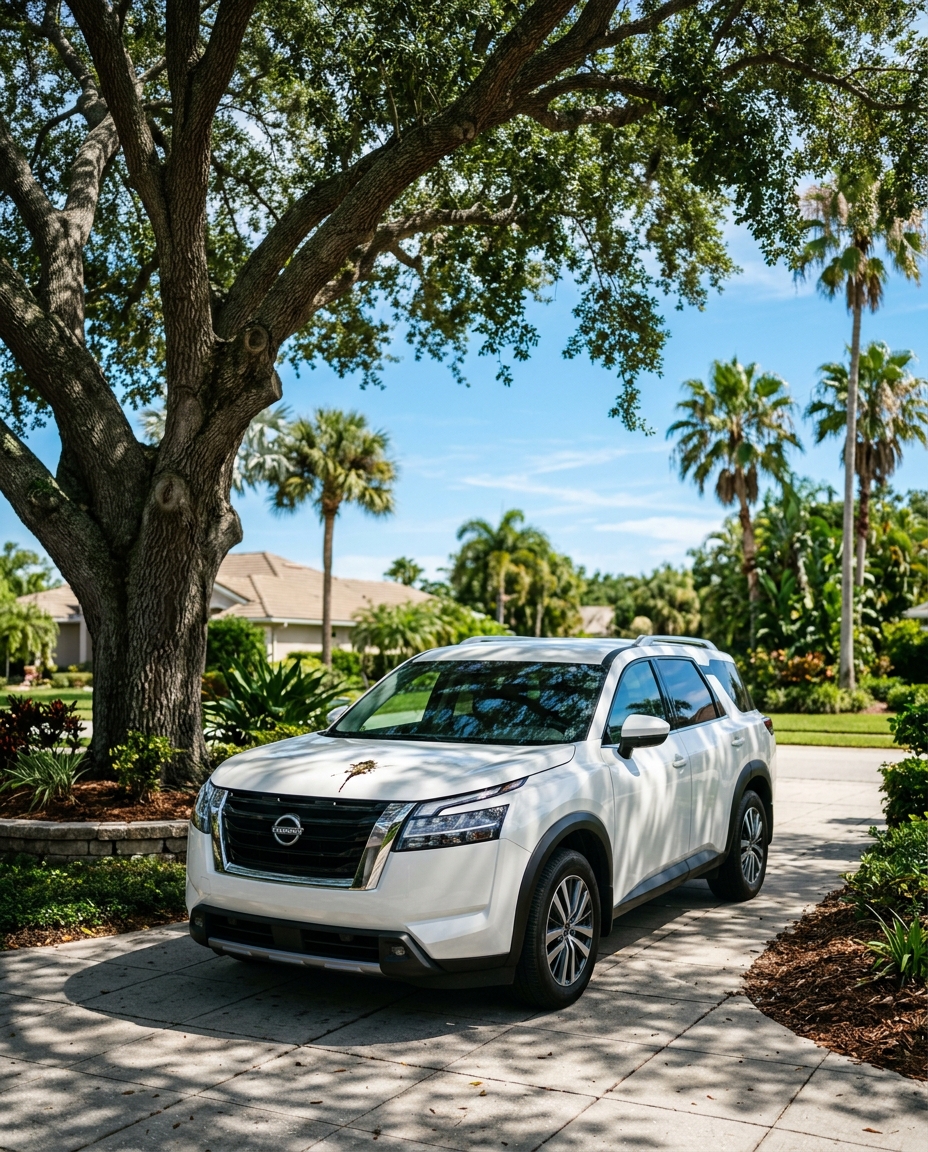
You spot a bird dropping on the hood Monday morning and think: that'll come off in the weekend wash. Makes sense — it's just a bird dropping. But on the Space Coast, where the sun bakes your hood to temperatures that would burn your hand, that logic has a flaw. The window between "this will rinse right off" and "this has etched my clear coat" is measured in hours, not days.
Why Florida Changes the Timeline
Bird droppings are acidic, and acid on paint is a slow burn — unless you add heat. Florida's UV index and surface temperatures accelerate the chemical reaction significantly. What would take days to cause damage in a cooler climate can happen in a single Brevard afternoon. The dropping softens in the heat, becomes almost paste-like, and the acid works its way into your clear coat while it sits there looking harmless.
A surface etch is exactly what it sounds like: the clear coat is physically worn away, leaving a slightly dull or textured mark where the dropping was. Washing removes the residue. It does not fix the etch. By the time the car goes through a wash on Saturday, that mark may already be there.
Tree Sap Is the Same Story
Pine and oak sap are a different chemical situation but they land in the same place. Fresh sap is sticky and relatively easy to deal with. Sap that's been sitting in a Florida parking lot for a day or two is a different problem — it hardens, bonds to the finish, and starts to resist normal washing. Try to scrub it off dry and you'll drag it across the surface like a pencil eraser, adding scratches on top of the original problem.
The longer it bakes, the more work it takes to remove. Sap that's been there for a week or more may need a clay bar treatment to pull it out of the surface properly. At that point you're doing a correction job, not a quick clean.
And Pollen, If You're Removing It Wrong
Pollen is less caustic than bird droppings but comes with its own risk — mostly in how people remove it. A dry wipe of a pollen-covered hood is essentially dragging fine abrasive across your finish. You might not see the scratches immediately, but they accumulate over a season into the dull haze people chalk up to general wear.
The right move with pollen is the same as with anything else that's settled on the paint: wet it first. A rinse with a hose or a spray of quick detailer lets the particles float off the surface rather than scrape across it.
What a Good First Response Looks Like
For bird droppings and fresh sap, the goal is to soften and lift, not push. Spray a little quick detailer — or even plain water — let it sit for a minute, then gently blot with a clean microfiber cloth. Work from the outside of the dropping in toward the center. The key word is blot: you're lifting the material off the surface, not wiping it across the paint.
Keeping a small microfiber cloth and a travel-size detailer spray in the car is worth it on the Space Coast. Between the birds, the oaks, and the pine trees that line most neighborhoods in Palm Bay, Melbourne, and Merritt Island, you're going to use it. Getting to a dropping within an hour is almost always better than waiting a day — and a lot better than waiting a week.
When It's Already Been There Too Long
If a dropping or sap patch has been sitting long enough to etch, a standard wash will not fix it. The residue comes off, but the damage to the clear coat is already done. Addressing it properly — whether through light polishing or something more involved — depends on how deep the etch went and how long it sat.
Most of it is preventable. The same Florida heat that speeds up the damage also means you're outside around your car more often. When you see it, deal with it. Even a quick splash of water buys time until you can do it right.