Your Car's Paint Doesn't Know September Is Here
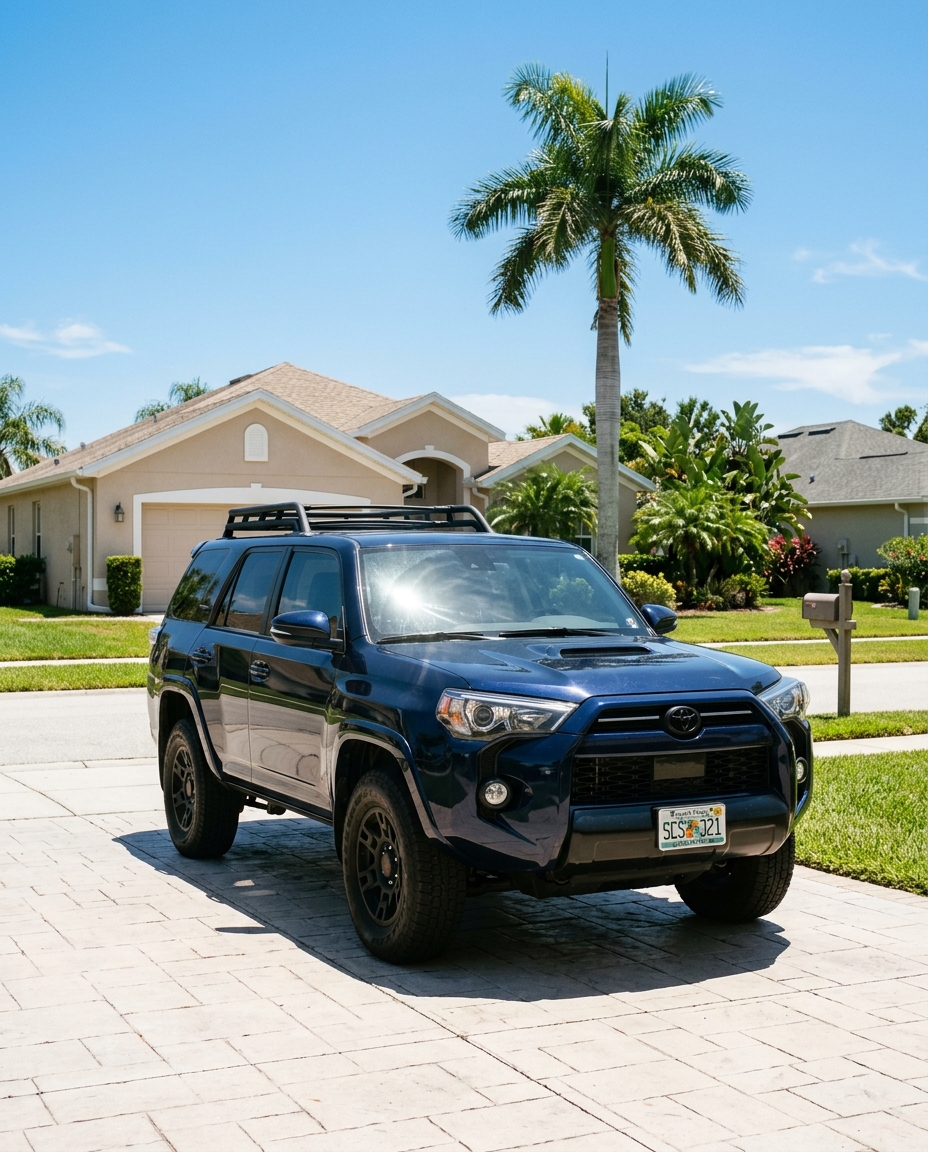
Sometime around Labor Day, the mental calendar shifts. Beach bags go into storage, kids go back to school, and the summer hustle winds down. People ease up on their car-care routines the same way. In most of the country, that timing makes sense. In Florida, it does not.
September on the Space Coast is still UV season — fully, aggressively, without much change from August. The UV index here regularly hits extreme levels (10 or above) well into October. The sun angle shifts a few degrees, but the ultraviolet intensity barely follows. Your car has been absorbing that radiation all summer, and it will keep absorbing it for another two months.
What UV Actually Does to Your Car
Ultraviolet radiation breaks down the polymers in your clear coat over time. That is what causes paint to look dull, chalky, or oxidized — the protective top layer is literally being degraded by sunlight. On dark-colored vehicles, this shows up as a dusty, faded appearance. On lighter colors, it often looks like uneven gloss or a surface that no longer reflects cleanly.
Inside the car, UV hits the dashboard, steering wheel, and any vinyl or leather surfaces the sun reaches during the day. That cracking and dryness along the edges of a dashboard is not just normal wear — it is UV degradation. Once the surface starts cracking, it is significantly harder to restore than to prevent in the first place.
The Mistake: Treating Summer Protection as a One-Time Task
Most people who applied a wax or sealant in the spring assume it is still doing its job in September. It is not. A quality sealant typically lasts three to six months under normal conditions. Florida's combination of extreme UV, daily heat cycles inside a parked car, and the salt air off the Atlantic shortens that lifespan considerably. A protection layer applied in March is likely long gone by July. Your paint has been exposed through the worst of the summer — and into fall.
The same logic applies to interior protection. Vinyl and leather conditioners wear off. Dashboard protectants need reapplication. If you have not touched the interior since spring, you are now several months into unprotected UV exposure during the brightest part of the year.
What to Check Right Now
Run your hand across the paint when the car has cooled down. If the surface feels rough or gritty rather than smooth, that is oxidation starting — the clear coat is beginning to break down. Look at the plastic trim around your doors, mirrors, and windows. Black trim that looks gray or ashy is a clear sign of UV exposure without protection. Inside the car, check the top of the dashboard and any leather seams. A surface that feels dry, stiff, or shows fine cracks along the edges has been sitting without protection long enough for damage to set in.
None of this means the car is ruined. It means protection lapsed and damage is accumulating. The earlier you address it, the less there is to correct.
What Actually Slows the Damage
Exterior protection in September starts with cleaning the surface properly — a thorough wash and ideally a clay bar treatment to pull out the embedded contamination that builds up over a Brevard summer — then applying a quality sealant or wax. A sealant applied now will carry you into the cooler months when UV levels finally do start to ease off.
For the interior, a UV protectant applied to the dashboard and trim creates a barrier that blocks ultraviolet radiation before it can continue degrading the material. It also keeps surfaces from drying out, which is what leads to cracking over time.
Florida does not do the gradual seasonal cool-down that the rest of the country gets. September still runs hot, still runs bright, and the damage your car accumulates now carries right into winter. Treating fall protection the same way you would treat spring prep — not as optional, and not as something summer already handled — is what keeps the surface in good shape year after year.