A Car Wash and a Detail Are Not the Same Thing
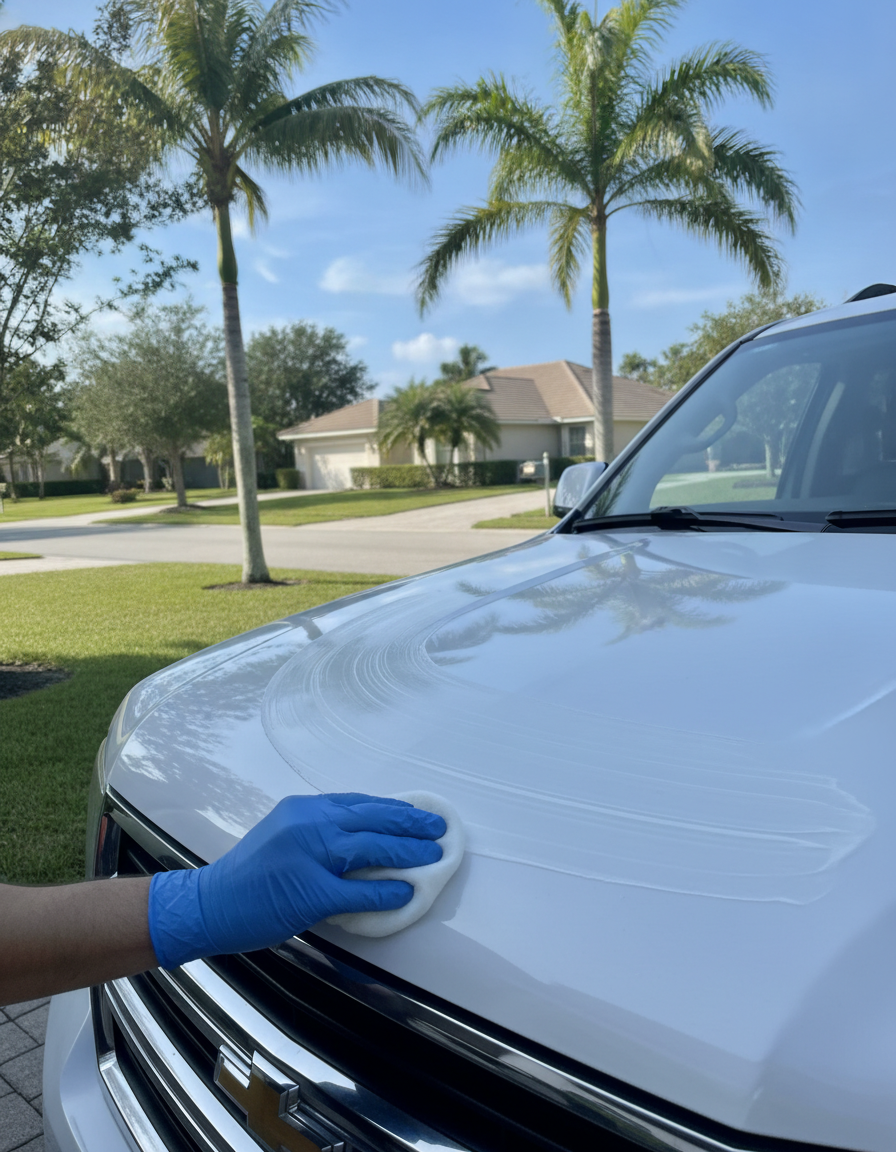
A lot of people wash their cars and feel like the job is done. The car looks clean, the dust and surface grime are gone, and that seems good enough. But a wash and a detail are doing two entirely different things — and confusing them is why so many Florida cars age faster than they should.
What a Car Wash Actually Does
A wash — whether you do it at home with a hose or run through an automatic — removes surface contamination. Dirt, dust, loose debris, whatever is sitting on top of the paint. That’s it.
It doesn’t remove bonded contaminants like tree sap, industrial fallout, or the acidic residue love bugs leave behind. It doesn’t restore anything. And it doesn’t add protection. On a freshly treated car with a good sealant, a wash is exactly what you need to maintain it. On a car that hasn’t been properly detailed in a year or more, a wash is just clearing the visible layer while everything underneath stays put.
What a Detail Actually Does
A detail is maintenance, not just cleaning. A proper exterior detail includes decontamination — a clay bar treatment that pulls bonded particles out of the paint — followed by a hand wash, paint inspection, and a protection layer that a drive-through tunnel can’t apply. The result is paint that’s not just clean but actually shielded against what Florida throws at it: UV, salt air, humidity, afternoon rain that leaves mineral deposits every time it dries.
A proper interior detail goes past vacuuming. It reaches the crevices where sand, crumbs, and pet hair compress over time, steam cleans surfaces that trap bacteria and odors, and conditions materials like leather that dry out fast in Brevard’s heat. What looks clean from the doorway usually isn’t once you start looking.
Why the Gap Shows Up Fast Here
On the Space Coast, the difference between washing and protecting becomes visible faster than most people expect. Salt air deposits settle on every surface after a beach day — including the undercarriage, the door jambs, the spots water never fully rinses. Sap from Brevard’s oaks bonds to clear coat within hours when summer heat bakes it in. Love bug splatter, if it sits more than a day or two, starts etching the paint underneath.
Regular washing slows the buildup. But it takes a detail to actually remove what’s bonded and put real protection back in place.
How Often Should You Detail?
That depends on how the car is used and where it lives. A vehicle that sits outside year-round near the water, gets driven to the beach regularly, and sees daily use needs attention more often than one that stays in a garage. As a general starting point, most vehicles benefit from a full detail two to four times a year.
If you can’t remember the last time your car had a full detail — interior and exterior both — that’s usually the answer right there.
What You Can Handle Yourself
There’s nothing wrong with washing your own car between details. A clean two-bucket wash with a proper automotive shampoo keeps contamination down and is genuinely useful maintenance. What’s harder to replicate at home is the decontamination step, the paint protection layer, and the deep interior extraction that requires the right equipment.
A clay bar treatment, a quality paint sealant application, or a thorough steam clean of the carpets and seats — those are the parts of a detail where the right tools and technique make a real difference in the outcome.
If Your Car Is Overdue
If your car has been through a Brevard summer — or a few of them — without a full detail, the place to start is a complete interior and exterior service. We come to your home or office throughout Brevard County and in Fellsmere, so there’s no drop-off and no waiting around. Call us at (321) 381-0091 to talk through what your car needs and get a quote.