How Beach Sand Actually Damages Your Car (And the Right Way to Get It Out)
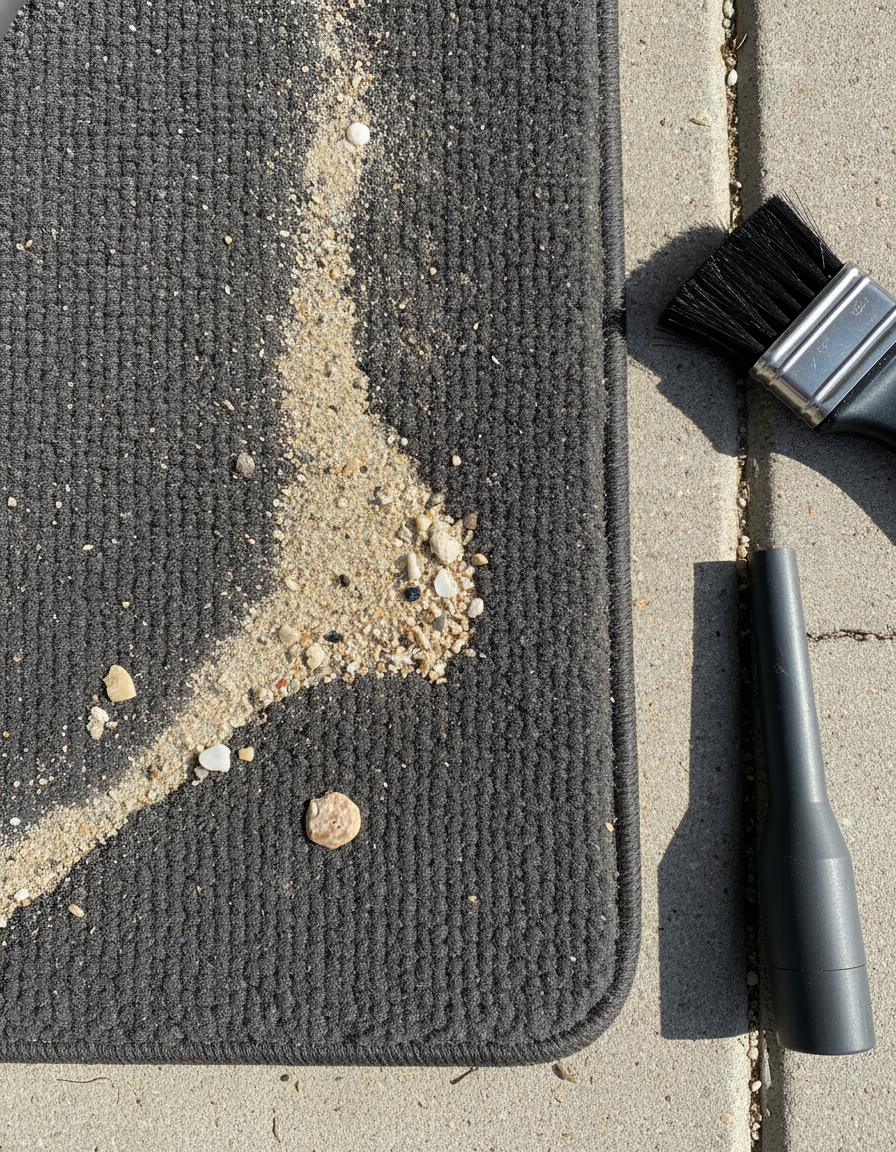
If you've been hitting Cocoa Beach or Melbourne Beach this summer — and who hasn't — there's a good chance your carpet is hiding more sand than you realize. Most people shake out the floor mats and consider it handled. But beach sand doesn't just sit on top. It works down into the base of carpet fibers, packs into seat seams, and settles under floor mats where it stays damp longer than you'd expect in Brevard's humidity.
Sand Is More Abrasive Than It Looks
It seems harmless, but sand is essentially fine-grit abrasive. Every time someone slides into the seat or shuffles their feet on the floorboards, those grains are cutting into carpet fibers. Over a summer of weekly beach trips, that friction wears carpet pile thin and grinds into the stitching on cloth and leather upholstery alike.
Leather seats are especially vulnerable. Sand finds its way into the needle holes along seam stitching and works like a slow saw every time you sit down. A few minutes with a vacuum after the beach costs you nothing. Letting it build up across an entire summer costs you the look and feel of the leather.
Vacuuming Wrong Makes It Worse
Running a vacuum straight over sandy carpet without loosening the sand first can push it deeper into the pile before the suction ever gets to it. The better move is to work the fibers first. A stiff-bristle brush — a detailing brush, a clean scrub brush, even a dry toothbrush in tight spots — dragged against the grain of the carpet will pull sand up to the surface where the vacuum can actually grab it.
Floor mats should always come out first. Shake them, then beat them a few times against a curb or a railing to knock out what's compacted in the corners. Getting loose sand off the mat before you vacuum means the suction isn't fighting a packed layer of beach the whole time.
The Spots People Miss
Seat tracks are a big one. Sand piles up in the rails under every seat and just stays there — most vacuum heads can't reach without a narrow crevice tool. The same goes for the gap between the seat cushion and seatback, the fold crease on a rear fold-flat seat, and the corners where carpet meets the door sill.
If kids are regular passengers, check between the rear seat cushions. That gap collects everything that falls out of pockets and bags at the beach. A crevice tool and a detailing brush to coax stubborn grains out of the seams will get what a regular vacuum head misses entirely.
When the Sand Is Already Damp
Wet sand compacts as it dries and bonds to carpet fibers — especially on lighter-colored carpet where it leaves a visible waterline. If wet towels or sandy shoes have been sitting on the floorboards, a dry vacuum alone won't get it all out. Hot-water extraction — the same method carpet cleaners and detailers use — forces water into the fiber to dissolve that compacted sand and pull it out along with the rinse water.
You can rent extraction equipment, but move slowly. Running the extraction head too fast leaves more moisture behind than you pulled out, and in a Brevard July that can turn into a mildew smell by the next afternoon. The slow pass is the effective one.
Keeping Up With It Through August
The easiest habit is a quick vacuum after every beach trip before the sand has time to settle and pack down. Ten minutes at home with a crevice tool keeps the deep clean from becoming a two-hour project at the end of the summer. Rubber floor mats with raised lips are worth considering for any car that sees regular beach days — sand collects in the tray instead of working into carpet, and they shake out in seconds.
If your carpet already feels gritty underfoot and brushing it out isn't getting ahead of it, a proper seat-and-carpet extraction is the next step — one that flushes the compacted sand out of the fiber rather than just moving it around.