Hurricane Season Car Care: What Space Coast Drivers Should Know
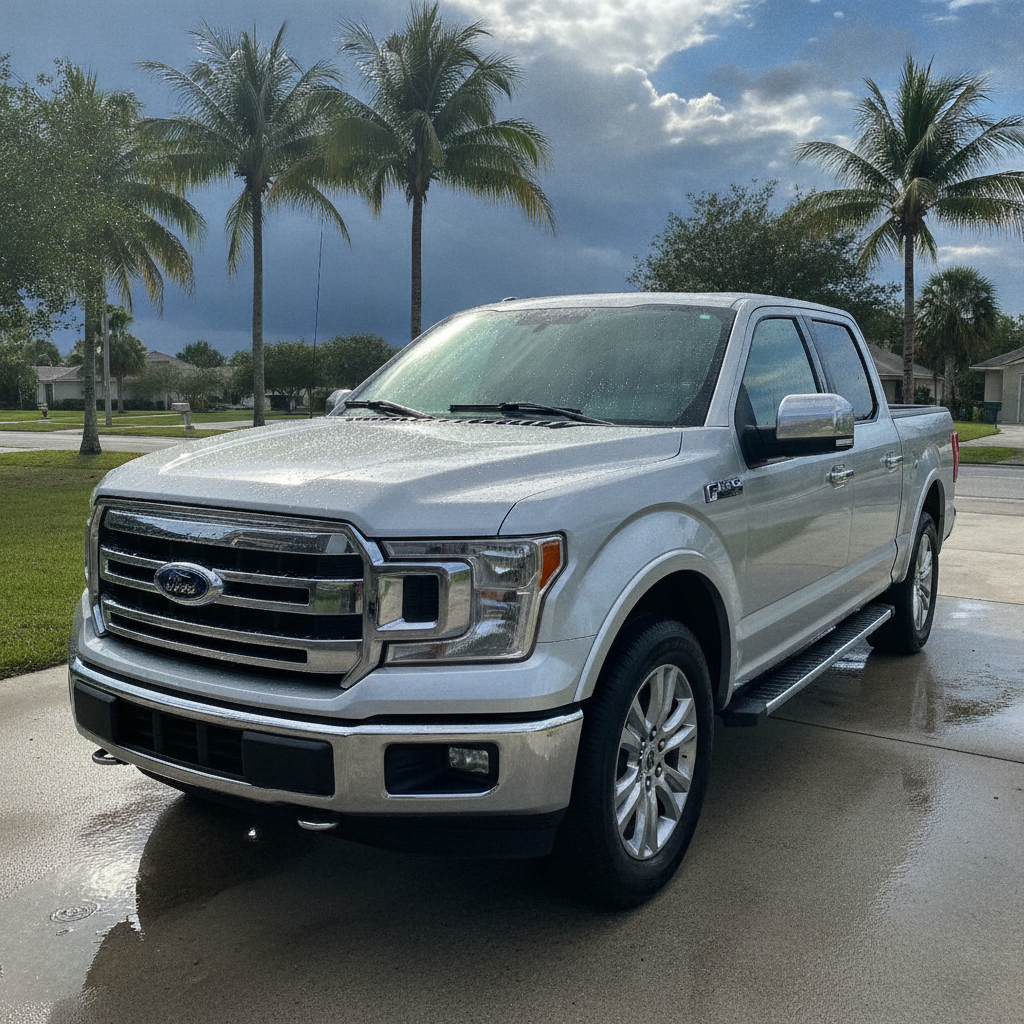
Living in Brevard County means you stop treating hurricane season as a distant possibility sometime around June 1st. Afternoon storms roll in off the Atlantic almost daily, the air carries more salt and moisture than anywhere inland, and oak trees — which are everywhere from Viera to Melbourne — drop debris like it’s their job. Your car is sitting in the middle of all of it.
The Real Threat Isn’t Always the Hurricane Itself
Named storms get the attention, but the slow grind of a Florida summer does just as much damage to your vehicle over time. Rain, heat, humidity, and debris cycling week after week is what actually degrades your paint, corrodes metal, and works its way into every crevice of your interior. The storm surge and flying debris from a direct hit are obvious. It’s the cumulative stuff that sneaks up on you.
Salt air is the biggest silent problem. When a storm churns the Atlantic — even a tropical storm a couple hundred miles offshore — it pulls extra salt moisture into the air along the coast. Merritt Island, Cocoa Beach, and Titusville get it worst, but it reaches inland too. Salt accelerates corrosion on brake lines, exhaust components, undercarriage hardware, and any nicks or chips in your paint where bare metal is exposed.
What to Do Before a Storm Arrives
If you have a garage, use it. Parking inside during a storm protects against hail, flying debris, and the tree branches that become projectiles in 60 mph gusts. If you don’t have covered parking, moving your car away from large trees is worth doing — even healthy trees drop limbs in high wind.
Give your car a thorough wash before hurricane season kicks into high gear, and apply a fresh coat of wax or paint sealant. A good sealant creates a barrier between your paint and the contaminants that follow a storm: standing water, road grime, and the mix of tree sap, pollen, and debris that ends up on every surface. If your paint hasn’t been sealed in over a year, it’s worth addressing before August arrives.
After the Storm Passes
The first thing to do after any significant storm is rinse the car down before you do anything else. Pine needles and wet leaves trap moisture against your paint for hours after rain stops, and oak sap sitting in standing water can etch clear coat over time. A quick rinse removes the most damaging material before it has a chance to set.
If your car got splashed with significant flood runoff — or worse, sat in standing water — that water isn’t clean. Storm runoff carries road chemicals, brake dust, oil residue, and whatever was sitting in drainage ditches. Rinse the undercarriage especially well. A garden hose aimed underneath the car does more good than most people realize.
Check the door jambs and trunk seals after any heavy storm. Water working into the cabin through a worn seal can go unnoticed for days, and by the time you smell it, you’re dealing with mold in the carpet or behind the door panels. If the interior smells musty after a storm, air it out immediately — open windows, run the defroster, and let it breathe before it becomes a bigger problem.
Staying Ahead Through the Season
Hurricane season runs through the end of November, and the statistical peak falls in August and September. That’s a long window. The most practical approach is to treat your car the same way you treat your home: a little prep before the season and consistent attention after each significant storm beats one big cleanup in the fall.
Wash the car within a day or two after heavy storms, especially if you live near the barrier islands or anywhere the salt air is thick. Keep an eye on your paint for chips and nicks — fresh spots that expose bare metal should be touched up promptly, because salt air turns a small chip into a rust problem faster here than almost anywhere else in Florida.
The cars that hold up best through a Brevard County hurricane season aren’t necessarily the ones that get the most attention — they’re the ones that get rinsed and dried consistently after every storm. That part you can handle yourself, and it makes a real difference by November.