The Love Bug Removal Mistake That's Scratching Your Clear Coat
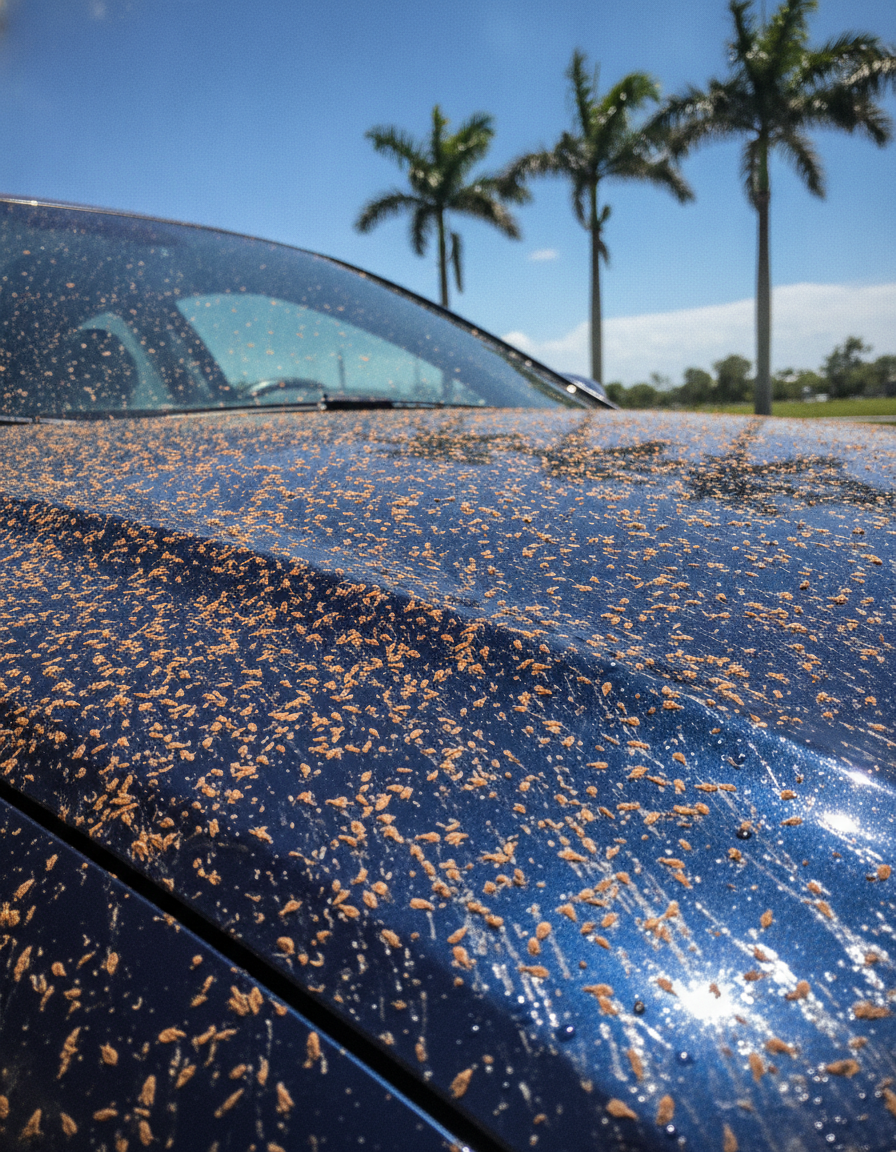
Love bug season in Brevard County runs twice a year, and the fall swarm is here now — late August through October. If you've driven anywhere on the Space Coast this week, your hood and front bumper already show it. The instinct most people follow makes sense: see a mess, wipe it off. The problem is that how you remove love bugs matters almost as much as how fast you do it.
Why a Dry Wipe Causes Damage
Love bug bodies are acidic. The longer they sit in Florida sun, the more that acidity works into your clear coat — which is why speed matters. But a dry towel dragged across dried splatter is essentially fine-grit abrasive against your paint. The bodies are stuck, the wings are brittle, and pulling them across the surface without lubrication leaves swirl marks and fine scratches behind. This shows up most clearly on dark-colored vehicles, but it's happening on every car.
The same damage can happen with a rough wash sponge or too much pressure from a microfiber that isn't properly wetted. Friction without lubrication is what hurts clear coat, and dried love bug residue gives you plenty to drag across it.
Rehydrate Before You Touch Anything
The step that makes the biggest difference is one most people skip entirely: rehydrating the bugs before you try to remove them. Soak a clean microfiber with warm water and drape it over the affected area for two to three minutes. The moisture softens the residue and breaks the bond with your paint. What was stuck becomes removable without force — that's the whole idea.
A quick-detailer spray works even better because it adds lubrication on top of moisture. Mist the area, let it dwell briefly, then use light passes with a fresh, wet microfiber to lift the residue. You're not scrubbing. You're carrying debris off the surface with as little contact pressure as possible.
What Not to Reach For
WD-40 gets passed around as a love bug solution, and it does loosen them — but it leaves an oil film on your paint that then needs to be cleaned off properly, and if it isn't, it becomes a magnet for more grime. Bug-and-tar remover is the better tool: spray, dwell, wipe. It's made for this without the greasy residue.
Avoid dish soap, vinegar, glass cleaner, or anything harsh. These strip whatever wax or sealant is on your paint at the same time they attack the love bugs — so you solve one problem and create another.
The 24-Hour Window
Love bug splatter becomes significantly harder to deal with after a day in Florida sun. The acidity bakes into the clear coat and starts leaving a hazy outline even after the bugs are gone. If you drove through a heavy swarm, even a plain water rinse that evening — no soap, no full wash — keeps the residue moist and buys you time. You're not cleaning the car, you're just keeping the bugs from curing onto the surface overnight.
If splatter has already been sitting for several days and left a dull, chalky mark behind, washing alone won't resolve it. That's light etching, and a clay bar treatment can pull it out if you catch it early. Left longer, paint correction becomes the only real option.
Reset Your Protection After the Swarm
Once the surface is clean, applying a coat of wax or a paint sealant is worth the time. Love bug season overlaps with the end of Brevard's harshest UV months — September still hits extreme UV index levels most days — and a fresh layer of protection gives your paint something to absorb the next round before it reaches the clear coat. The swarm isn't done after one wave, so treating your paint like it isn't is the right call.