Love Bug Season Is Over — The Residue on Your Paint Isn't
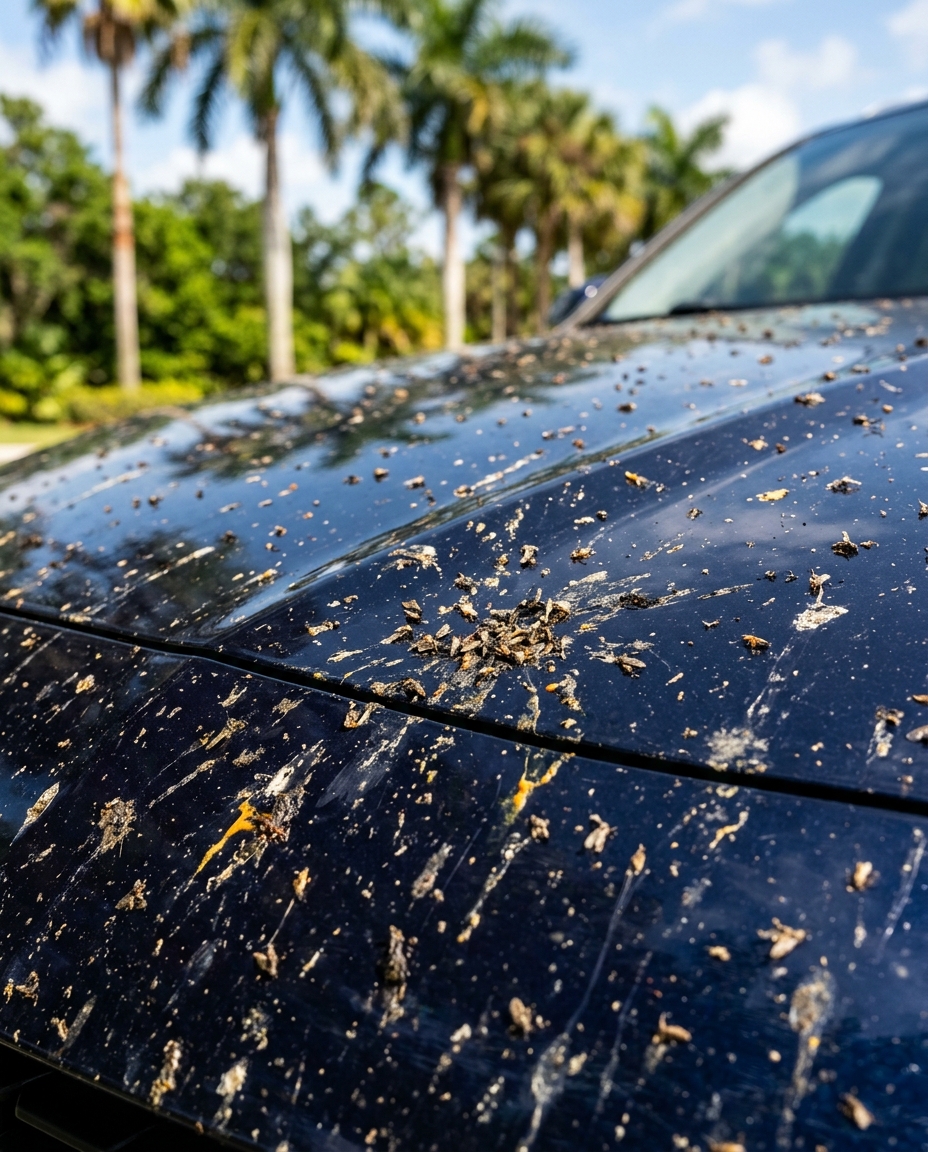
September's love bug swarms are gone, and most Space Coast drivers have already stopped thinking about them. If your car collected a heavy coat of bug splatter over the past few weeks and hasn't had a thorough wash since, the problem hasn't ended with the season — it's just getting quieter.
Love Bug Residue Doesn't Stay on the Surface
The mistake most drivers make is assuming that because they can still see the splatter, it's still removable the same way fresh bugs are. What you're actually seeing after a few weeks is organic residue from decomposed bodies that has started to bond with your clear coat. Florida's heat accelerates this process significantly.
Love bugs are mildly acidic. Their bodies break down quickly in warm weather, and the byproducts of that decomposition etch into the clear coat over time. A light splatter cleaned off within a day or two usually comes off cleanly. The same splatter left for three weeks in Brevard County heat is a different problem entirely.
November UV Makes It Worse, Not Better
It's November, but the sun on the Space Coast hasn't clocked out. The UV index here stays significant well into the fall, and it's doing two things to any residue still on your paint: baking it harder onto the surface, and accelerating the chemical process that dulls your clear coat.
Drivers often notice oxidation or dull spots on the hood and front end after a heavy love bug season and assume it's normal wear. Sometimes it is. Often, it's the result of letting acidic residue sit through late summer and early fall in Florida's heat and sun — a window that runs right through October and into November on the Space Coast.
Wiping Them Off Dry Is the Wrong Move
When love bug residue has dried and hardened on the paint, the instinct is to scrub. That's the worst thing you can do to a clear coat. Dried residue is abrasive enough to leave fine scratches, and once you've scratched through the clear coat, no amount of washing fixes it.
The right approach is to soften the residue first. A bug-and-tar remover, a few minutes of soak time, and a microfiber cloth with no pressure will lift it without grinding it in. If those panels have been baking in direct sun all day, work in the shade — the product needs time to do its job before Florida's heat evaporates it off the surface.
What's Left After the Bugs Are Gone
Even if you did clean off the splatter back in September, November is a good time to look at what that residue may have left behind. Areas that collected heavy splatter — typically the hood, front bumper, and grille — may show early signs of etching under raking light. Run your hand across those panels on a dry car. Paint that feels smooth is in decent shape. Paint that feels rough or gritty is carrying bonded contamination that a standard wash won't address.
A clay bar treatment will pull surface contamination off those panels and let you assess the actual paint condition underneath. If the etching has gone deeper than the contamination layer, that's a different conversation — but most love bug damage caught before the end of the year is still at the stage where it can be addressed without paint correction.
The Window Closes as the Season Does
Florida's mild winters are good for a lot of things. For paint damage, they mean the chemical processes that hurt your clear coat don't slow down the way they would somewhere with a hard freeze. There's no cold front coming to interrupt the oxidation working on your hood.
If your car spent September driving through swarms on US-1 or A1A and hasn't had anything more than a rinse since, now — before another month passes — is the right time to address it. A thorough wash, the right removal technique on any remaining residue, and a close look at those front panels is half an hour well spent before December.