November Sun Is Actually Harder on Your Dashboard Than July Was
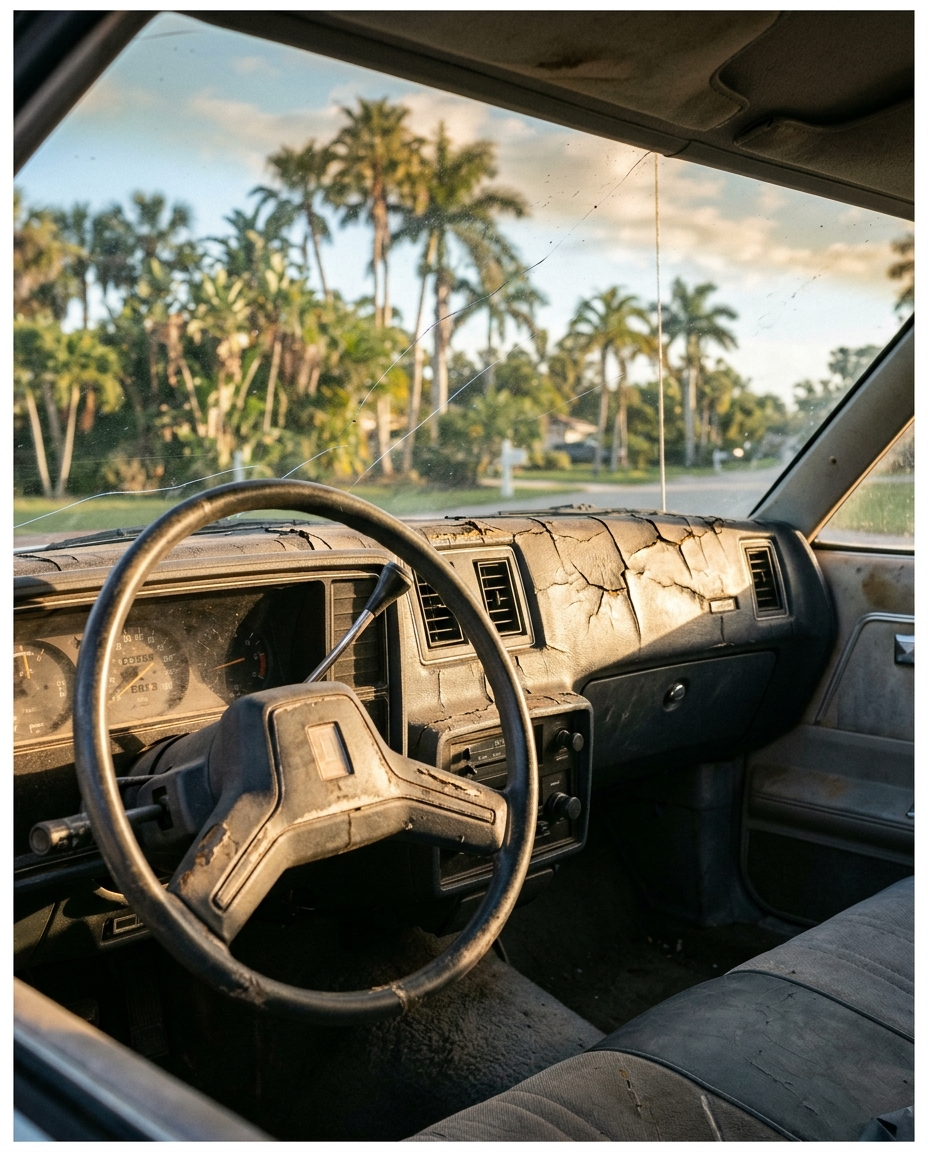
Most people figure they have made it through the hard part once October passes. The brutal heat backed off, the car survived the summer, and UV just is not something you think about in November. What they are missing is that the sun is lower in the sky now — and that changes exactly where the light hits your car. The afternoon sun in mid-November cuts through your windshield at a shallower angle than it did in July, landing almost flat on the dashboard surface. That is not a subtle difference.
Why Sun Angle Matters More Than Sun Intensity
In summer, the sun sits nearly overhead at midday. Most of that UV hits the roof and the hood — surfaces you have likely treated, or at least thought about. Some gets into the cabin, but the windshield deflects a good portion of it. In November and December, the sun stays low throughout the day, particularly in the afternoon, and that trajectory changes everything about where the light goes.
Florida's latitude keeps the UV index meaningful year-round, even at lower sun positions. What changes is where it lands. That low afternoon sun cuts through the windshield almost horizontally and falls directly on the dashboard, the top of your door panels, and anything else facing forward. The surfaces that were partly shielded in July are getting hit directly now.
What UV Does to Interior Plastic Over Time
Vinyl, plastic, and synthetic leather all contain plasticizers — compounds that keep the material flexible and resistant to cracking. UV radiation breaks those down steadily. The first sign is usually a slight color shift, or a surface that starts to feel chalky under your hand. After that comes fading, then brittleness, then cracking.
The dashboard takes the most direct exposure, but the same thing happens to the upper sections of door panels and anything near the A-pillars. Once the material starts to crack, there is no reversal. No product restores cracked vinyl — it can be masked for a while, but the structural integrity is gone.
The Problem with Most Dash Sprays
The common move is to spray the dash with a protectant after a wash. It is the right instinct, applied with the wrong product. Most consumer dash sprays — especially silicone-based ones — do not block UV radiation. They coat the surface. The dashboard looks better for a few weeks, and the shine makes it feel protected, but the UV is still getting through and doing what it does.
Worse, some of those products leave behind a residue that attracts dust, makes the surface look greasy in strong light, and can accelerate breakdown of the material underneath over time. The products that actually work use UV-absorbing compounds that penetrate the surface and bond with the material — and they require proper prep to do that. Applying them over built-up silicone residue means they are not reaching anything they can protect.
What Actually Helps
A windshield sunshade is worth more than most people give it credit for. A good-fitting shade blocks UV while the car is parked, reduces the temperature inside the cabin, and meaningfully slows the plasticizer breakdown. For a car that sits outside during the day, it is one of the most practical things you can do for the interior.
For surfaces already showing early signs of fading — that slight color shift or chalky texture — a proper UV treatment while the material is still intact will slow or stop the progression. The order of operations matters: clean off whatever old product is sitting on the surface first, then apply a UV protectant that actually bonds with the material. Skipping the prep and layering over old residue is how you end up with product buildup and a surface that is still degrading underneath.
When to Have Someone Handle It
If the dashboard is already showing signs and you want to address it before it goes further, that is exactly when to get a professional set of eyes on it. We offer an Interior UV Protectant treatment as a standalone service — prep included. November is the right time for it, before the low winter sun angle runs up the damage through the rest of the season.
We come to you — your home or office anywhere in Brevard County and in Fellsmere. If your interior is showing signs and you are ready to book a detail, call us at (321) 381-0091.