October Is Still Hurricane Season — Your Car Doesn't Know That
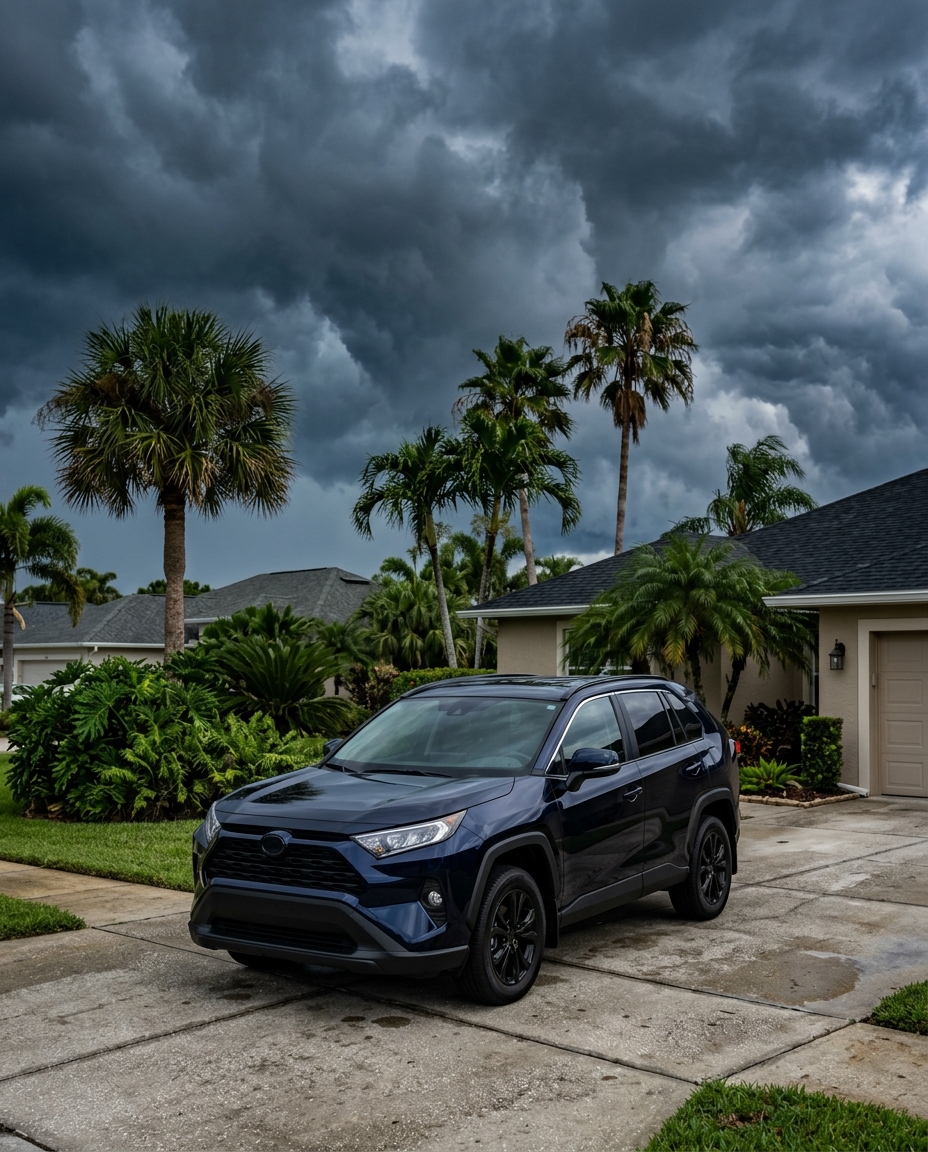
Most people on the Space Coast breathe a little easier after September. The big love-bug push is winding down, the summer crowds have thinned, and if nothing came through in August or September, it’s easy to feel like the real storm window has closed. It hasn’t. Florida’s hurricane season runs through November 30, and October has historically produced some of the state’s most damaging storms — Matthew in 2016, Michael in 2018. The season isn’t over, and neither is its threat to your car.
Most of the car-specific hurricane advice focuses on aftermath: what to wash off, what to inspect after a storm passes. The more useful question for where we are right now is what to do when a storm is actually forecast — and what storm water does to a vehicle that ordinary rain doesn’t.
Storm Water Is Different from Rain
Regular rain is mostly clean water. What accumulates during a hurricane or tropical storm is a different mix — saltwater surge if your neighborhood is near tidal zones, standing water that has picked up petroleum runoff from roads, debris-laden water that pushes silt into door seams and under body panels. When that water sits, it doesn’t just dry. It leaves residue that continues working on metal, rubber seals, and the painted surfaces tucked under your rocker panels and wheel wells long after the storm is gone.
That’s why a wash after a tropical system isn’t quite the same as a wash after a heavy afternoon storm. The chemistry of what you’re rinsing off is different. And what works into the gaps and crevices — not just what sits on the hood and roof — is often what causes trouble three or four weeks later.
Where to Put Your Car When a Storm Is Forecast
If you have a garage, use it. That’s the easy answer. What’s less obvious is the tradeoff when you don’t: a carport protects from debris but not from wind-driven rain; street parking in a low-lying area puts you at surge risk; parking lots that look elevated can still funnel standing water toward the lowest spots. It’s worth checking the flood zone maps for your neighborhood before a storm is on top of you, not while evacuation traffic is backing up US-1.
If you’re in a flood-prone area and a significant storm is projected nearby, moving the vehicle to higher ground is worth the inconvenience. Interior flood damage from storm surge is one of the harder things to recover from — not because it can’t be cleaned, but because the water reaches places that stay damp and create mold and odor problems that show up weeks later, not hours.
What to Check in the Week After a System Passes
Even a storm that tracks offshore drops salt-laden rain and kicks up debris across the Space Coast. After any system passes — including one that seemed to miss — the combination of storm residue on the paint, debris in the door jambs and cowl, and whatever the standing water left on the undercarriage all needs to be rinsed out. Not necessarily detailed right away, but rinsed thoroughly and soon.
Salt from storm systems doesn’t just sit on the surface. It works into the seams around doors and windows, settles under the rocker panels, and begins corrosion on anything bare or metal. A thorough rinse within a day or two of a system passing — paying attention to the undercarriage, wheel wells, and door jambs — addresses most of it before it has time to take hold. The closer you are to the coast, the more this applies, and most of Brevard qualifies.
October Still Has Real Storm Potential
Atlantic water temperatures don’t drop meaningfully until late October at the earliest. The conditions that fuel hurricane development stay in place for another several weeks, and storm formation over the Gulf and Atlantic remains real through mid-November. The track probabilities shift as the season progresses, but the window isn’t closed.
If you haven’t done a thorough post-summer inspection yet — checking under the rocker panels, clearing debris that settled in the cowl and windshield trim, looking at the wheel wells for salt buildup from the summer — October is still the right time. A storm may not be the reason you do it, but it’s a good enough prompt.