What a Brevard Summer Does to the Inside of Your Family Car
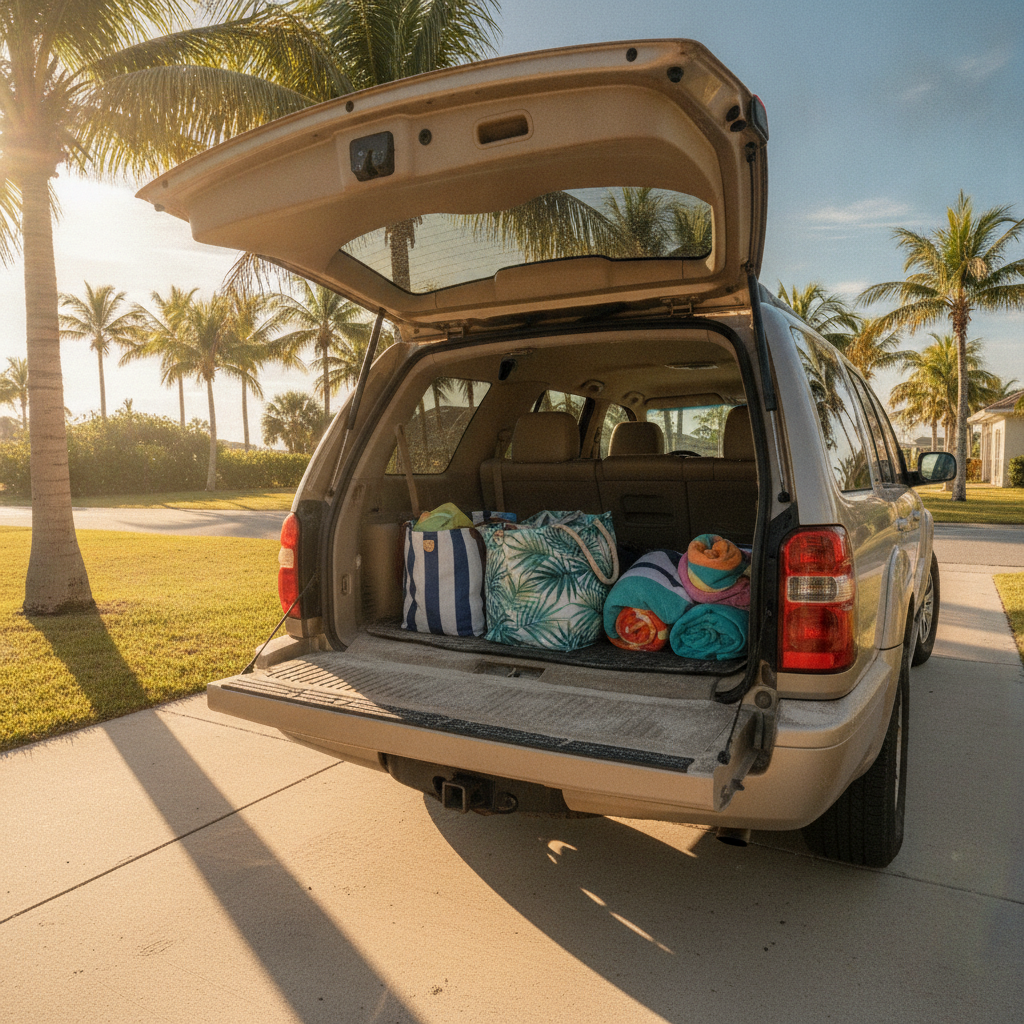
If you’ve been making regular runs to Cocoa Beach or Melbourne Beach this summer, your car’s interior has been collecting a lot more than you might realize. It’s not just sand. It’s the combination of fine grit, 130-degree parked-car heat, salt-air humidity, and whatever else a busy July throws at a family vehicle. By mid-summer, most beach cars in Brevard are in a pretty different state than they were in May.
Sand Works Deeper Than You’d Think
Brevard’s beach sand is fine-grained and light, which is exactly what makes it so hard to remove. It doesn’t just sit on the surface of your mats. It works its way under floor mats, into seat track grooves, between seat cushion folds, and deep into carpet fibers. Every time someone gets in or out of the car, that sand shifts and grinds against the surfaces it’s on. Over a summer’s worth of beach trips, that micro-abrasion adds up — carpet and fabric in high-traffic areas wear faster than they otherwise would.
Heat Bakes Everything In
A Florida car parked in the sun on a July afternoon can hit 130°F or more inside. That heat does two things to whatever’s in your interior: it speeds up any chemical process already happening, and it sets stains and odors deeper into fabric and carpet. A spilled juice box or a damp beach towel left on the seat might not seem urgent when you’re rushing home — but after a week of those temperatures, what soaked in is now baked in. Stains that would’ve lifted easily on day one are significantly harder a week later.
Humidity Adds Its Own Layer
Brevard’s summer humidity is relentless. You pile into the car soaking wet from the beach, toss a damp towel across the back seat, crank the AC, and do it again the next weekend. That moisture cycling through the interior — into carpet, under seats, into seat foam — creates the right conditions for mildew to take hold. The faint musty smell a lot of cars develop by July isn’t just stale air. It’s usually organic material (salt, moisture, sand, fabric) starting to break down in a warm, intermittently humid space.
What Dogs Add to the Equation
If your dog has been along for beach trips or morning errands, the hair situation in a hot car compounds fast. Pet hair doesn’t just rest on the seat — heat and static push it into fabric and carpet fibers at a depth that a standard vacuum passes right over. Damp fur after a beach swim makes it worse, matting hair into upholstery in a way that needs real extraction to address. It’s one of those things that’s easier to manage little by little than to deal with all at once at the end of summer.
The Smell Is Usually the Last Symptom
By late July, plenty of Brevard family vehicles have developed what I’d call a signature summer smell — salt air, sunscreen, wet gear, and whatever food got dropped and only half-found. The smell shows up last, not first. By the time you’re really noticing it, the sources are already embedded in carpet and fabric. Air fresheners mask it temporarily; they don’t pull it out of the material.
What Actually Helps
For ongoing maintenance, a few habits go a long way. Shake out floor mats after beach days before the sand dries and locks in. Crevice-tool vacuum the seat tracks and under-seat areas — that’s where the heaviest grit concentration ends up. If you’re carrying wet gear, crack a window when you get home so the interior can breathe instead of sealing the moisture inside.
For the accumulation that builds up over a full summer — the embedded sand, the set stains, the matted pet hair, the odor already worked into carpet — regular vacuuming won’t get there. That level of buildup typically calls for extraction, steam cleaning, and actual deodorizing rather than just masking. A family beach car in Brevard in July is about as demanding an interior use case as there is. Knowing what’s in there is the first step to actually dealing with it.