What Happens to a Car That Sits Through a Florida Summer
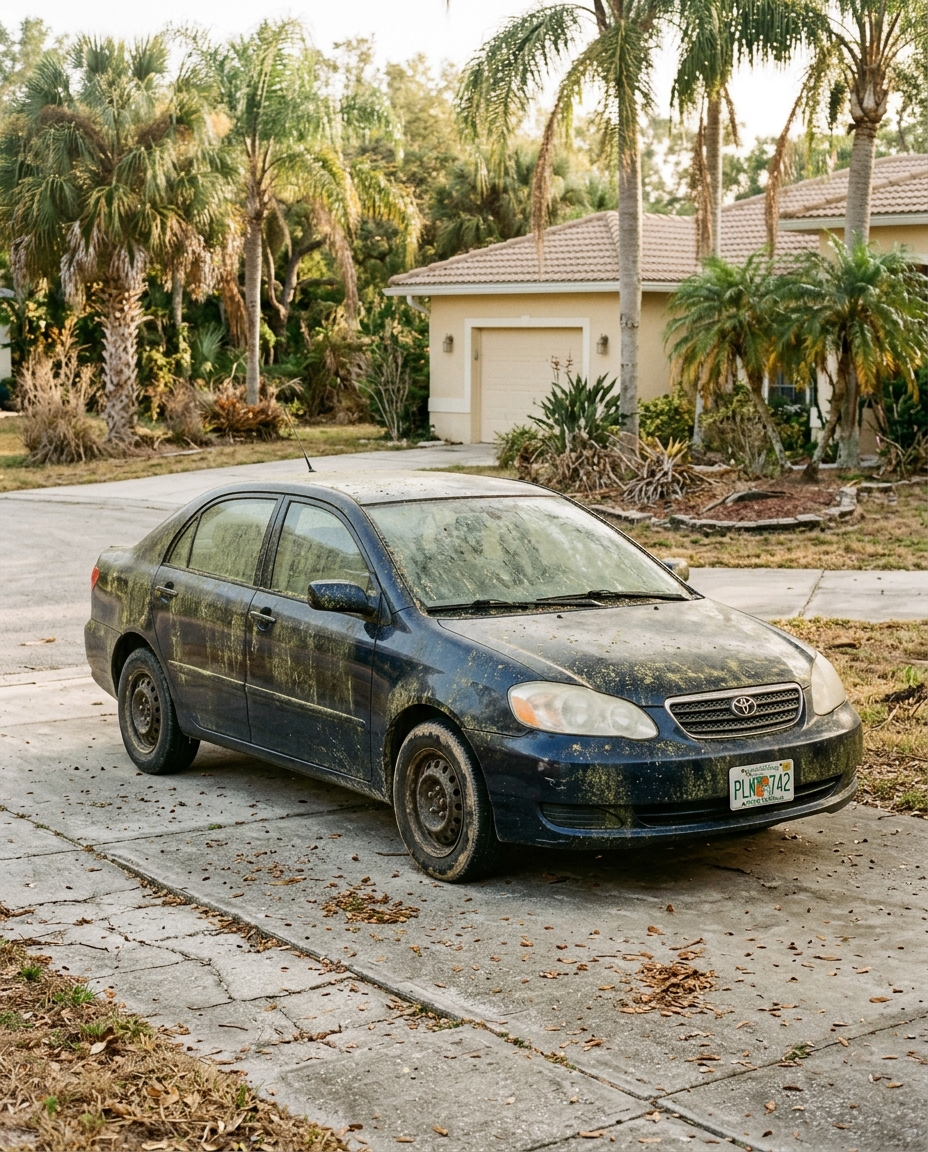
Most people assume a car that's been parked since May just needs a wash and a charged battery before it's back in shape. The battery and the wash are both real needs. What usually gets skipped is everything that happened to the car while it was sitting — and a Florida summer is not easy on a parked vehicle.
Snowbird season is here. Across Brevard County, cars that spent the summer in driveways and parking spots are coming back into regular use right now. If yours is one of them, here's what six months of Florida heat, humidity, and UV actually do to a car that isn't being driven.
The Exterior: What Lands and Bakes On
A car that's parked through summer accumulates things that a driven car doesn't. Bird droppings that hit in June might have been sitting for five months. Tree sap from the oaks and pines common across the Space Coast hardens in the heat and gets more difficult to remove with every week it stays. Both are mildly acidic, and the longer they sit in direct sun, the deeper they work into the clear coat underneath.
Paint that was in good shape going into the summer holds up better, but even protected surfaces lose something after months of sustained UV without being washed or inspected. The fading shows up subtly at first — a slight haziness or loss of depth in the color — and gets more obvious once the car is next to one that was regularly maintained.
Run your hand across the paint after your first wash. If it still feels rough or gritty to the touch after drying, bonded contamination has settled into the surface over the summer. That's not something a wash removes. It's on top of the paint, not in the rinse bucket.
The Interior: What Heat and Humidity Leave Behind
A sealed car in Florida heat becomes a humidity chamber. Moisture enters through door seals and gaps, gets trapped, and creates conditions for mold and mildew to take hold. You might not smell anything the first time you open the door. Give it five minutes with the windows up, or run the A/C and notice what comes through the vents — that's when it usually announces itself.
Leather and vinyl surfaces dry out faster in sustained heat without conditioning. A summer of direct sun through the windshield cracks dashboards and steering wheel surfaces in ways that a few months of regular use would not. The damage isn't always dramatic, but it's cumulative, and it's harder to reverse than it is to prevent.
Carpet and fabric seats also hold onto anything that was in the car before it was parked — pet hair, sand, food particles — and that material breaks down differently in heat and humidity than it would at room temperature. It's one reason why cars that have sat tend to have a distinct smell even if there's no visible mold.
The Undercarriage: The Part Nobody Checks
For cars that spent the summer parked near the coast, the undercarriage is worth a look. Salt air doesn't stop because the car isn't moving — it settles on everything, and the undercarriage collects it the same way the paint does. Rust that's starting on brackets and hardware doesn't announce itself until it's already doing real damage.
This isn't a reason to treat a stored car like a crisis. Most vehicles come through a Florida summer in reasonable shape, especially if they were clean going in and parked in a covered spot. But the inspection point matters. A car that sat outside from May through October needs a different starting point than one that was driven weekly all summer — and the checklist is longer than most people expect.