What's Actually Drying Out Your Leather Seats (It's Not What You Think)
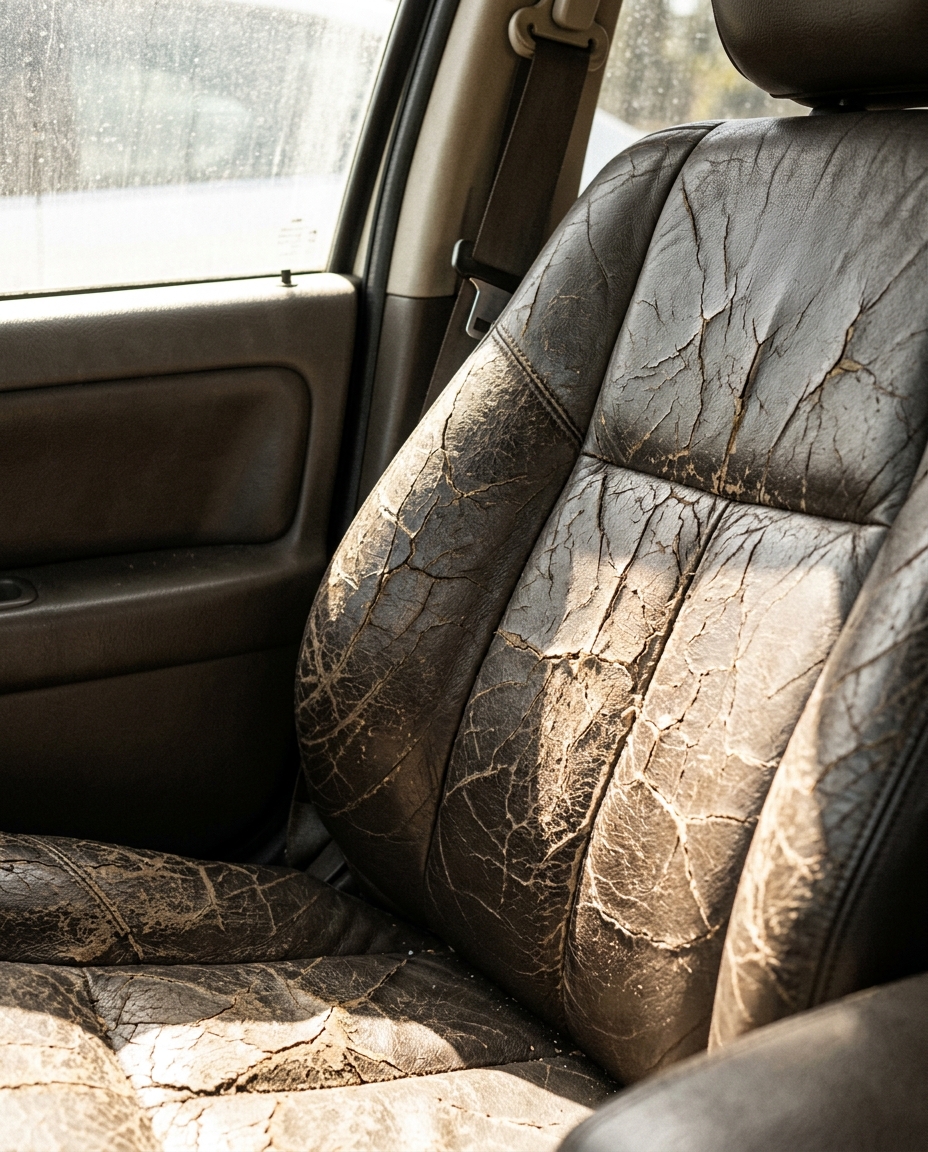
Leather seats that crack and stiffen get blamed on age. That's usually the wrong explanation. A three-year-old car parked outside on the Space Coast can have leather in worse shape than a fifteen-year-old car that spent its life garaged. What's doing the damage isn't time — it's Florida's sun, and how leather actually responds to being repeatedly heated and dried.
What's Really Happening to Your Leather
Leather is dried and processed animal hide. It has natural oils in it that keep it flexible and supple — but those oils don't last forever. UV radiation breaks down the compounds that hold them in place. Heat accelerates the process by pulling moisture out of the leather faster than it can absorb it back. Every time your car sits in the sun, the surface gets a little drier. Do that enough times and the leather starts to crack.
In Brevard County, your car sees UV that would be extreme even by Florida standards. Parked outside from June through October, interior temperatures can hit 140–160°F on a clear afternoon. The dashboard and the top of the front seats take the worst of it. What looks like normal aging after a few years is often two or three Florida summers of UV and heat stripped from the leather — if it wasn't being maintained correctly.
The Product in Your Cup Holder Might Be Part of the Problem
Most drivers who want to care for their leather reach for a spray or wipe protectant — often Armor All or something similar. The intention is right, but these products are mostly silicone. They coat the surface of the leather and make it look shiny, but silicone doesn't penetrate into the hide. It sits on top, and over time it can accelerate drying by blocking the leather's ability to absorb actual conditioning products.
A product that makes leather look good in the parking lot is not the same as one that keeps it healthy. The difference becomes visible within a few years. Leather treated regularly with a silicone-based spray often cracks at the flex points — seat bolsters, the center of the seat bottom, anywhere that gets repeated pressure and bending. The surface looks fine, then it doesn't, and the transition happens faster than most people expect.
What Leather Actually Needs
Real leather conditioning works in two steps. First, you clean the leather with a pH-neutral leather cleaner that breaks down body oils, sunscreen residue, and general grime without stripping the finish. Sunscreen is particularly hard on leather because it soaks in fast and the chemical buildup accelerates breakdown of the surface over time.
After cleaning, the leather gets conditioned with a product that actually penetrates into the hide — something with lanolin or a dedicated leather conditioner that restores the oils UV has pulled out. A good conditioner takes time to absorb. You apply it, let it sit, and then buff off the excess. That's the step most rushed or drive-through approaches skip entirely.
In Florida, leather needs this kind of care more often than the owner's manual suggests. A vehicle that lives outdoors here, driven daily, benefits from a professional cleaning and conditioning at least twice a year — once as summer is getting going and once as it winds down. A car that parks outside all day, every day, needs it closer to three or four times.
What to Check Right Now
Run your hand across the seat bolsters and the top of the headrest — the places that get the most direct sun. If the leather feels stiff or dry to the touch, that's early warning. If you're seeing hairline cracks starting at the flex points, the leather has already lost a significant amount of its natural oils. Cracking across flat areas usually means the damage is further along.
The good news is that leather can be brought back in most cases with a proper clean-and-condition cycle. What can't be reversed is deep cracking that has gone through the hide itself — that's a replacement job. The seats that end up there are almost always the ones that went years without any real conditioning. Catch it early and there's usually a lot of life left in them.