What Near-Miss Tropical Systems Actually Do to Your Car
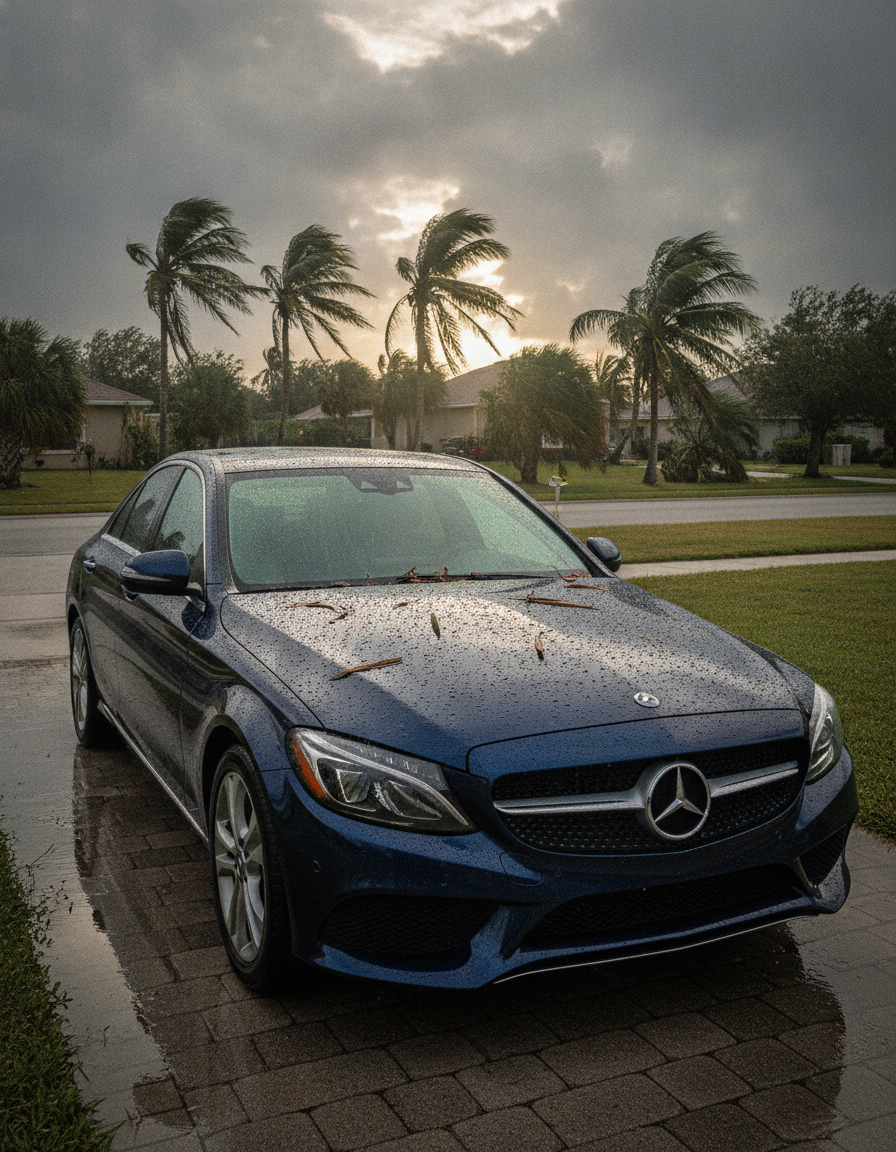
The storm tracked north. Brevard stayed under a watch, not a warning. You got gusts, a few hours of hard rain, maybe some yard cleanup — but the car looks fine sitting in the driveway. That's where most people stop thinking about it.
The assumption is understandable: the storm missed us, so the car is okay. But tropical systems — even the ones that don't make direct landfall — push a specific mix of contamination that a regular rinse doesn't fully undo. The Space Coast's position along the Atlantic makes it worse than it sounds.
Tropical Rain Isn't the Same as a Clear-Sky Shower
A normal afternoon thunderstorm drops relatively clean water. A tropical system does something different. As a storm churns over warm Atlantic water for days, it picks up salt spray, organic matter, and fine particulates and carries them hundreds of miles ahead of the center. That rain falling on your car isn't washing it — it's depositing a light layer of salt and dissolved material that dries in place once the sun comes back out.
On paint, that shows up as water spots and a dull, slightly hazy look that a quick wipe-down won't fix. On trim, rubber seals, and the undercarriage, it accelerates the kind of slow corrosion that's hard to see until it becomes a real problem.
Salt Doesn't Stop at the Coastline
If you live in Palm Bay, Melbourne, or Viera — well inland from the water — you might assume salt air is someone else's concern. During a tropical event, it isn't. Strong onshore winds drive salt spray much farther inland than on a calm beach day, and the rain then deposits it directly on whatever it hits. Vehicles parked outside take the full brunt, even a mile or two from the coast.
Neighborhoods closer to the water — Merritt Island, Cocoa Beach, Rockledge along the river — get it worse. But nobody in a storm track is really sitting it out completely, and the misconception that inland parking means no salt exposure is the one that causes people to skip the post-storm rinse entirely.
Debris Contamination Is Easy to Miss
The wind before and during a near-miss storm kicks up pine needles, leaf fragments, road grit, and sandy soil. A lot of it ends up embedded in your paint, packed into door jambs, and sitting in wheel wells. Left there while wet, organic debris creates an acidic residue that etches clear coat over time — the same process that makes bird droppings and tree sap so damaging in normal conditions, just spread across a wider area after a storm.
Checking under the wheel arches and along the rocker panels after a storm isn't overcautious. It's just what the environment calls for when you're on the Space Coast.
What to Do After a System Passes
A thorough rinse within 24 to 48 hours of the storm clearing is the most useful thing you can do. Focus on the lower body panels, undercarriage, wheel wells, and door jambs — the spots that trap debris and hold moisture. Water pressure does most of the work if you get to it quickly, before salt and residue have time to dry hard and bond to the surface.
If the car sat through the worst of it, or if you're already seeing water spots on the paint, that's past what a garden hose fixes. Spots left by mineral-heavy tropical rain often need a clay bar treatment to remove cleanly — scrubbing at them with a cloth is one of the faster ways to add fine scratches to your clear coat.
Near-miss season runs through November on the Space Coast. The most common pattern isn't a direct hit — it's a parade of systems that track close enough to push conditions your way without making landfall here. Each one is a small accumulation. Staying ahead of it means not waiting until the corrosion and oxidation are visible before you start paying attention.