What Your Work Truck Is Actually Saying to Customers
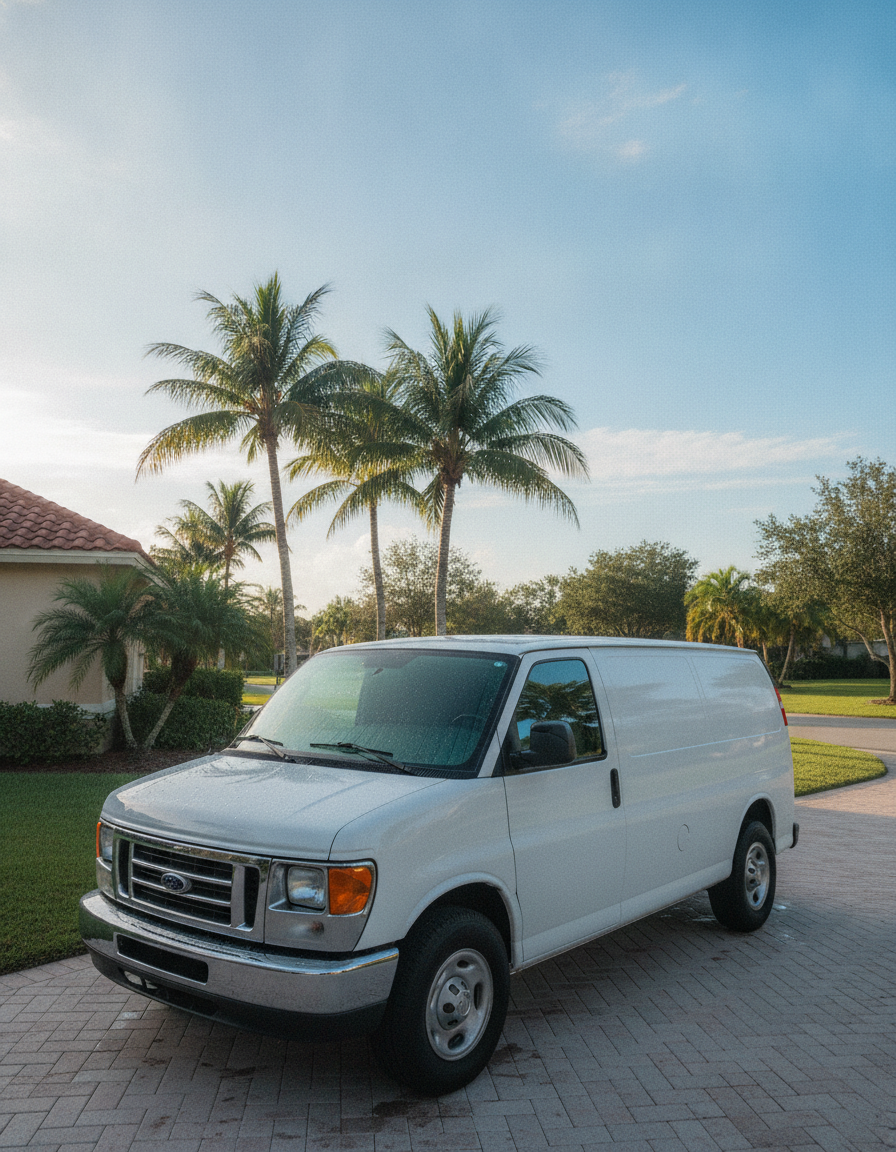
There's a version of this that comes up regularly. A contractor or service pro reaches out, and when they describe the vehicle — or when we pull up — it's clear the last real clean was well over a year ago. The explanation is almost always the same: "It's a work truck." Which is fair. But most people underestimate how much that phrase actually costs them.
What a Work Vehicle Accumulates
Day in, day out, a work truck or van collects things a car wash doesn't reach. Ground-in grime on the carpet and mats, grease on the upholstery, tools and gear coming in and out. In Florida, add humidity and afternoon thunderstorms. Wet gear left in the cab, a soaked floor mat from an open window — in 90-degree heat, that moisture becomes odor within two days. Once it's worked into the seats and carpet, it's not coming out with a vacuum and a spray bottle.
On the exterior, daily driving in salt air leaves deposits that bond to the paint over time. A quick car wash keeps the worst of the visible dirt off, but it doesn't reach what's worked into the door jambs, wheel wells, and lower panels. Chemical soaps in automated washes also strip whatever protection was on the paint — which means the next round of contamination bonds even faster.
The Assumption Most Fleet Owners Make
The assumption is that customers aren't paying attention to the vehicle. They are. If you do any kind of work where you pull up to a home or office — HVAC, plumbing, pest control, landscaping, real estate — your truck or van is the first thing anyone sees. Before you knock on the door, before you say your name, the vehicle has already made an impression. A streaky, water-spotted exterior and a cab that smells like gear and old takeout is an impression. Just not the one you want.
This isn't about having a spotless truck every single day. It's about not letting months of buildup become the default presentation of your business.
What a Professional Detail Actually Covers
A full detail on a work vehicle goes deeper than a wash on both interior and exterior. Inside: carpet and seat extraction, steam cleaning on hard surfaces, odor treatment at the source, and attention to the areas that collect the most — around the console, under the seats, in the door pockets. If you've had equipment, pets, or food passengers in the vehicle for months, those spots are usually worse than you think.
Outside: a proper wash, contamination removal from the paint surface, and a sealant application that gives the paint real protection against UV and salt for the next several months. The results are most visible on darker vehicles — when the paint actually reflects light the way it was designed to, the truck looks newer than it is.
How Often Is Often Enough
For a vehicle that's on the road every day and carries tools or equipment, a full detail every three to four months is a reasonable target. Between details, a proper exterior wash every couple of weeks prevents the worst contamination from bonding to the paint. The more the interior gets loaded and unloaded, the faster things accumulate — and the more a periodic professional clean is worth it compared to letting it go for a year.
Getting It on the Calendar
We come to where the vehicle is — your shop, your home, your job site. No drop-off required. Fleet pricing varies by vehicle size and condition, so the best place to start is a quick call to talk through what you're working with. If you've got multiple vehicles, we can work out a schedule that keeps the whole fleet in decent shape.
Call (321) 381-0091 to book a detail or ask about fleet scheduling. We'll put something together that makes sense for how you work.