Why Your Headlights Turn Yellow in Florida (And What Actually Fixes It)
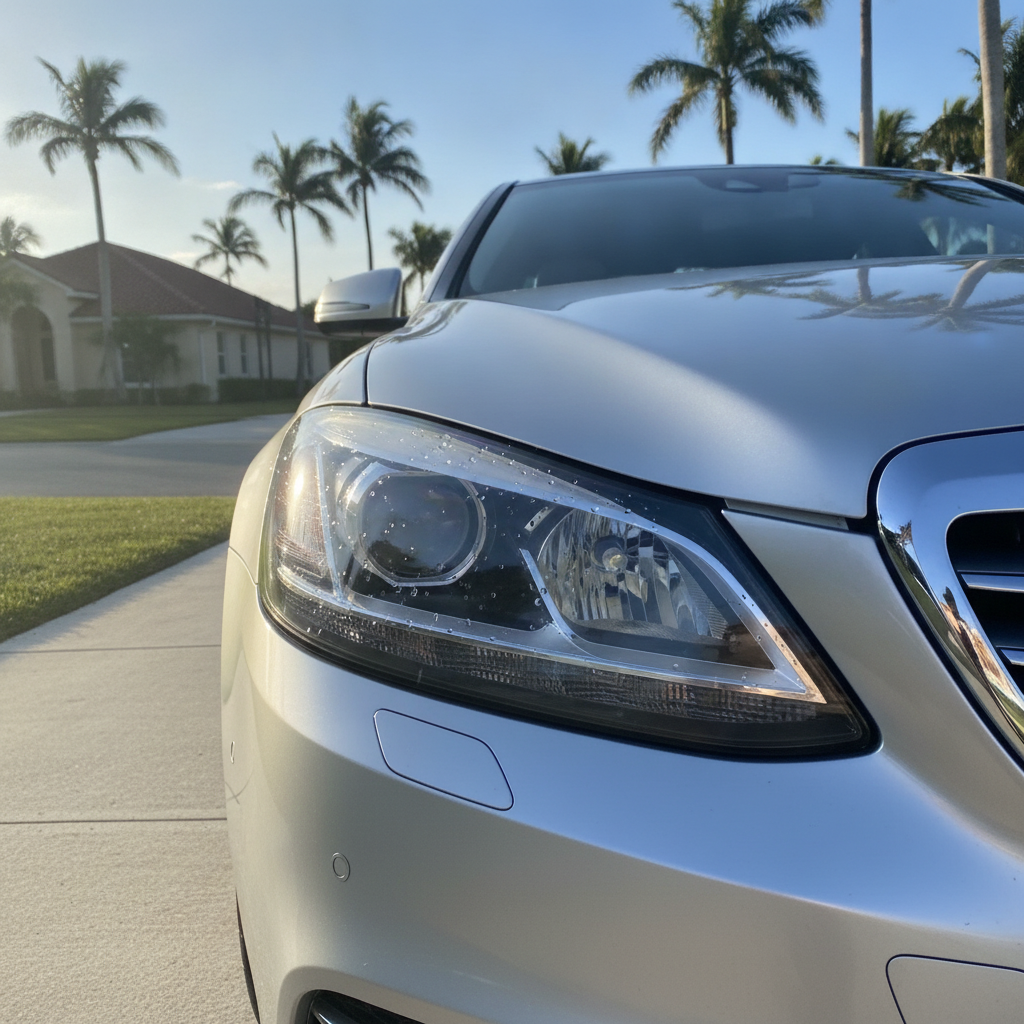
If your headlights look like someone smeared petroleum jelly over them, you're not imagining it — and it's not just about looks. Yellowed, cloudy headlights cut your nighttime visibility significantly, and here in Brevard County, this happens faster than almost anywhere else in the country.
What's Actually Going On With the Plastic
Automakers switched from glass headlight covers to polycarbonate plastic in the late 1980s. Polycarbonate is lighter, shatter-resistant, and easy to mold into the curved shapes modern headlights need. The catch is that bare polycarbonate yellows quickly when exposed to UV — so manufacturers add a thin clear coat on the outer surface to protect it.
That clear coat is what breaks down over time. On the Space Coast, with intense UV year-round and very little cloud cover to give your car a break, that protective layer degrades faster than it would somewhere like the Pacific Northwest. Once the clear coat starts failing, UV hits the polycarbonate directly, oxidizing the surface and turning it that familiar hazy amber-yellow.
Heat Makes It Worse
The lens gets hit with heat from two directions: Florida sun baking it from outside and the headlight bulb warming it from within. Halogen bulbs especially run hot. That thermal cycling — scorching afternoons in Melbourne or Palm Bay followed by cooler nights — stresses the plastic and accelerates the breakdown.
Parking in direct sun every day speeds this up considerably. A car parked in a shaded garage most of the time will hold onto clear lenses years longer than one sitting outside on a concrete driveway soaking up afternoon sun. If your car lives outside, factor in that the lens faces forward into direct sun at highway speeds for hours at a time.
Why It's a Safety Issue, Not Just Cosmetic
Cloudy lenses scatter and diffuse light instead of projecting it cleanly down the road. A headlight that should be throwing a focused beam is instead creating a dim, unfocused glow that doesn't reach as far or illuminate the edges of the lane the way it was designed to. Heavily oxidized headlights can reduce effective light output dramatically. That's a real safety problem on dark rural roads around Titusville, Micco, or the stretches of US-1 that don't have streetlights.
What Actually Works (and What Doesn't)
The internet is full of toothpaste tricks. Toothpaste is mildly abrasive, and yes, it will buff off the very top layer of grime and make the lens look a little clearer — for a few weeks. It doesn't address oxidation, and it leaves the lens without any UV protection, so it fogs right back up. The same goes for WD-40, bug spray, and the other home remedies that cycle through social media every summer.
What actually works is mechanical abrasion followed by UV protection. That means wet-sanding with progressively finer grits to remove the oxidized material, then compounding and polishing the surface to restore clarity, and finally applying a UV sealant or clear coat to protect the fresh plastic underneath. Skip the last step and Florida will have it foggy again in six to twelve months — the UV protection is non-negotiable if you want results to hold.
The DIY Option Is Real, But Has a Learning Curve
Headlight restoration kits at auto parts stores can work. They typically include sandpaper in multiple grits, a polishing compound, and a small bottle of UV coat. The process takes 30–45 minutes per headlight and requires patience — tape off the paint around the lens carefully, work through the grits in order, and don't skip the UV protection step at the end.
The risk in DIY is mostly in the sanding stage. Go too aggressive with coarse grit and you can leave scratches the polish can't fully remove. If you're not already comfortable doing compound work on paint, headlights aren't the easiest place to learn — the curve of the lens makes it easy to sand unevenly.
When to Replace Instead of Restore
If the fogging is on the inside of the lens, restoration won't help — that's a moisture or failed seal issue and the housing itself needs replacing. Same if the lens has deep cracks or significant pitting from road debris. Restoration works on surface oxidation; it can't fix structural damage to the plastic.
Replacement assemblies range from around $50 for basic economy units to several hundred dollars for OEM or complex projector setups. For most everyday vehicles, a proper restoration is the smarter path — just make sure you nail the UV sealant step, or you're right back where you started by next summer.
The Florida climate pushes headlight maintenance to the front of the line faster than most drivers expect when they move here from other states. Clear lenses mean better visibility and a cleaner overall look — worth keeping an eye on, especially heading into the longer nights of fall and winter.