Why November Is the Right Time to Deal With What Summer Did to Your Paint
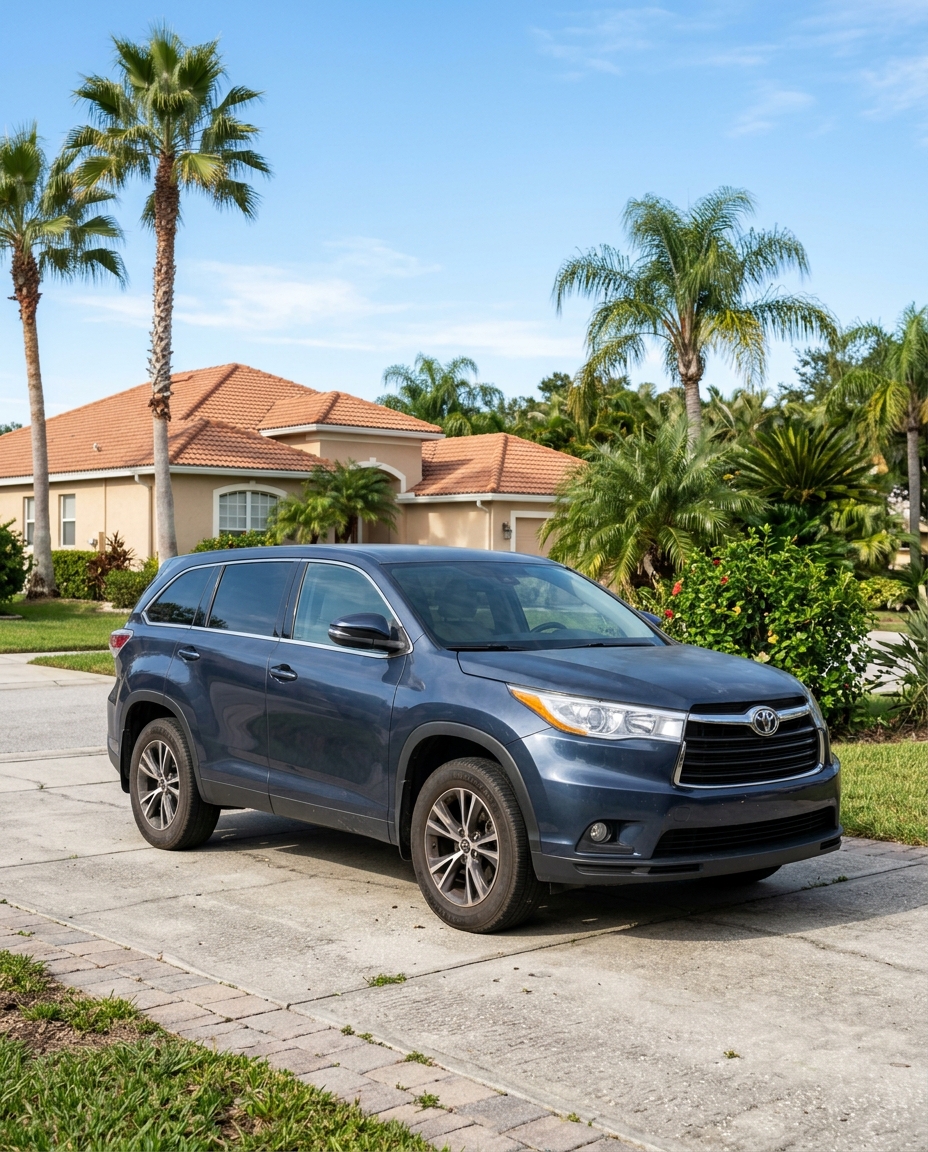
Florida summers are not gentle on paint. From May through October, your car absorbs months of peak UV, afternoon thunderstorm water spots, salt air off the Atlantic, love-bug acid, and whatever the oak trees decided to drop. By the time November arrives, the damage from all of that is already in — but most drivers do not address it until spring, or never at all. That window is a mistake, and the reason is simple: protecting paint works better when the damage is fresh, not when it has had another season to deepen.
What Summer Actually Leaves Behind
Clear coat oxidizes faster under sustained UV exposure than most people realize. The gloss you notice going dull on a dark-colored car is not just cosmetic — it is the clear coat breaking down at the surface, a process that continues as long as the surface is unprotected. Paired with that is bonded contamination: iron particles from brake dust, sprinkler minerals, and biological acids from love bugs and bird droppings do not rinse off. They chemically bond to the surface over time, and washing alone does not touch them.
Run the back of your hand across a clean, dry panel. If it feels rough or gritty — like fine sandpaper — that is not dirt. That is contamination bonded to your clear coat. The summer just gave it months to settle in.
Why November Works Better Than Spring
Paint sealants and waxes cure differently depending on surface temperature and humidity. In peak summer, a panel baking in direct sun is far hotter than the air temperature, even in shade. Sealants applied to an overly hot surface flash off too quickly, producing an uneven bond and shorter protection life. The same product applied in November — when morning temps sit in the 60s and 70s and the car has been out of the sun — bonds more completely and lasts longer.
Humidity matters too. High humidity traps moisture under sealants during cure, which can cloud the finish or prevent proper adhesion. November through February is Brevard County's drier stretch, which is why paint-protection work done this time of year tends to hold better than anything applied in July.
The Misconception Worth Correcting
Most drivers treat paint protection like a spring ritual — something you do when the weather finally feels good and you want the car looking sharp. The problem with that logic is that unprotected paint does not pause. Oxidation and contamination keep advancing on a bare surface. Protecting in November puts a physical barrier over whatever the summer caused, stopping that progress before it gets worse. Waiting until March means three more months of damage on top of what is already there.
This matters more on the Space Coast than most places. The combination of salt air, intense UV, and summer storm chemistry here ages paint faster than most of the country. A car sitting unprotected from November to March is not resting — it is losing ground.
What Needs to Happen Before Protection Goes On
Bonded contamination has to come off before any sealant or wax can do its job. That is what a clay bar treatment does — it pulls embedded particles out of the clear coat and leaves the surface properly smooth. Skipping that step and waxing over bonded grime just seals the contamination in place. After decontamination, a quality sealant gives you six months to a year of coverage depending on the product, which gets you through the worst of the next UV season with protection already built in.
If the paint has more than just contamination — fine swirl marks from washing, or dull patches where oxidation has advanced — correction work before the sealant makes the protection worth doing. Sealing a compromised surface locks in the problem. The protection layer works best over paint that is in good shape first.
November is a good month to be honest about where your paint is. The summer showed you what it would do left on its own. This is the window to decide how the next one goes.