Why Your Paint Feels Rough After a Wash — And What to Do About It
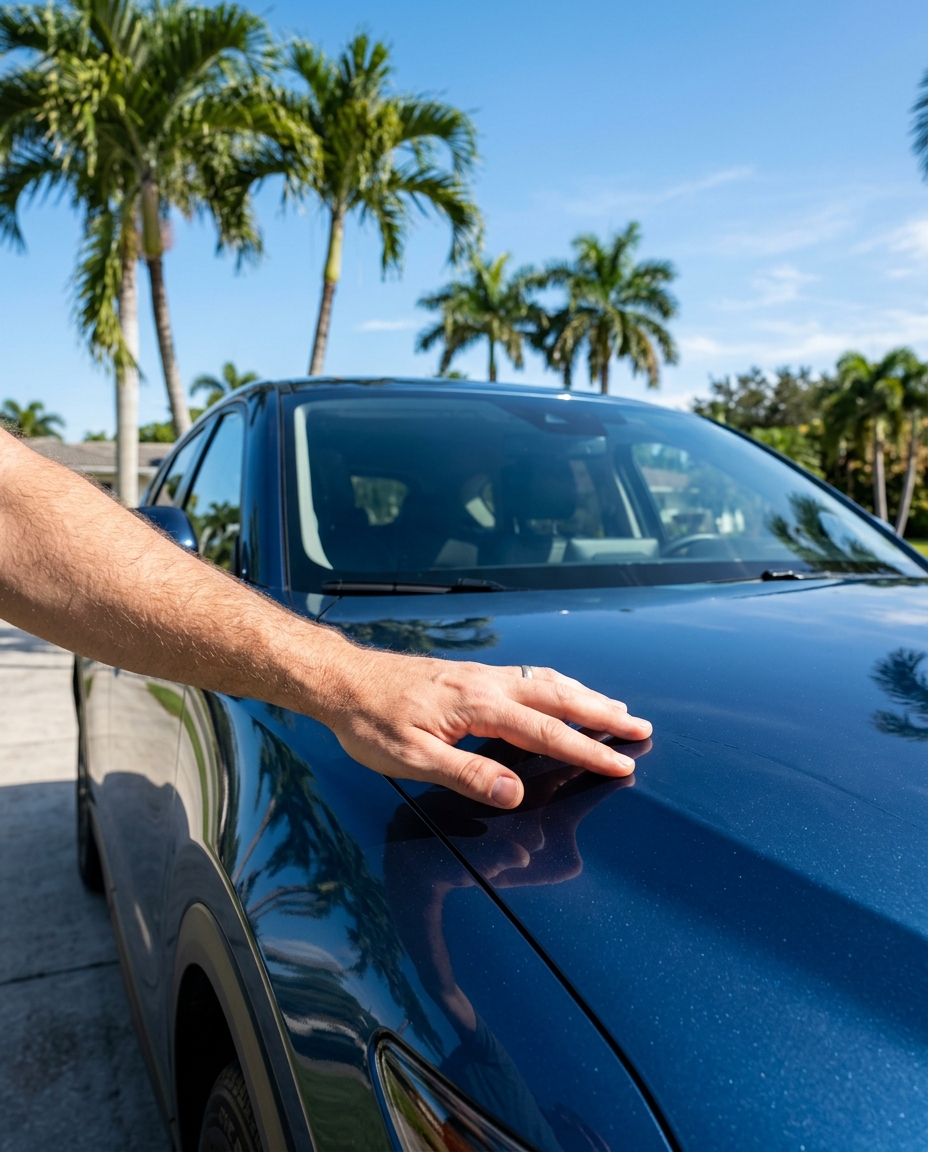
Run your fingertip across the hood after your next wash, once the car is dry. If it feels smooth — truly smooth, like the back of a piece of glass — the surface is clean. If it feels rough, or like there’s a faint grit still clinging to the paint, you’re feeling something that washing doesn’t touch. Most drivers assume a freshly washed car is a clean car. On the surface, it looks the same. But the paint is carrying embedded contamination that soap and water were never designed to remove.
What’s Actually on Your Paint
Your clear coat is porous at a microscopic level. Over months of driving — especially here on the Space Coast — particles embed themselves in that surface and stay there. Salt deposits from coastal air, industrial fallout from traffic, road tar, tree sap residue, and brake dust from the cars ahead of you don’t just sit on top of the paint. They bond with it. A wash removes loose dirt and surface grime. These particles are bonded in, and they don’t budge.
You can’t see most of them. But you can feel them — that rough, almost sandpaper texture after a fresh wash is the contamination. After a Florida summer, with months of salt air, love bug residue, afternoon rain hitting hot paint, and sustained UV exposure baking everything in, most vehicles have significant buildup by the time September rolls around. The car looks clean. The paint surface is anything but.
What a Clay Bar Does
A clay bar is a detailing-grade compound that physically pulls embedded contaminants out of the clear coat. The bar is worked across the paint surface with a lubricant — it’s not abrasive the way a polish is, and it doesn’t remove paint. What it does is shear away the bonded particles that washing can’t dislodge. The result is a surface that actually feels smooth again.
Most people who’ve never had a clay bar treatment don’t realize what they’ve been missing, because they’ve never felt their paint without the contamination layer sitting on top of it. After a proper clay treatment, the difference under your hand is immediate.
Why It Matters Beyond Texture
Contamination isn’t just a feel issue. A bonded layer of salt and industrial particles traps moisture against your clear coat, which speeds up oxidation. It also keeps sealant and wax from bonding properly — which is why some people notice their wax stops lasting as long as it used to. It’s not making direct contact with the paint. It’s sitting on top of whatever the summer left behind.
Clay bar treatment is a prep step, not a finish in itself. After decontamination, paint sealant or wax actually works the way it’s supposed to — bonding directly with the clear coat rather than riding over a layer of contamination. That’s the difference between protection that holds for a year and protection that starts fading in two months.
When Your Car Probably Needs One
The fingertip test after a wash is the easiest check. If the paint feels rough or textured when dry, it needs decontamination. Other signs: wax that isn’t lasting as long as it used to, water that no longer beads the way it did when the paint was fresh, or a dull haze that doesn’t clear up with a normal wash. In Brevard County and along the coast, vehicles accumulate contamination faster than they do inland — the salt air alone is enough to warrant a clay treatment at least once a year, typically after the summer season.
Getting It Done Right
Clay bar work is one of those jobs where technique matters more than the tool. Work the bar across paint that’s dry or insufficiently lubricated, and you’ve introduced fine scratches you were trying to prevent. Done correctly, with the right lubricant and consistent, even pressure, it leaves the surface ready for whatever protection step comes next. If the paint is already showing oxidation or swirl marks on top of the contamination, decontamination is typically the first step before correction — the two often go together on vehicles that have been through a full Florida summer without protection attention.
We offer clay bar treatment as a stand-alone service starting at $59, and it’s included in our Signature Exterior Enhancement package starting at $119. If your paint has that rough post-wash feel and you’re not sure what it needs, give us a call at (321) 381-0091 — we’ll take a look at what’s going on before anything is scheduled.