Why Your Vacuum Isn't Getting All the Pet Hair Out of Your Car
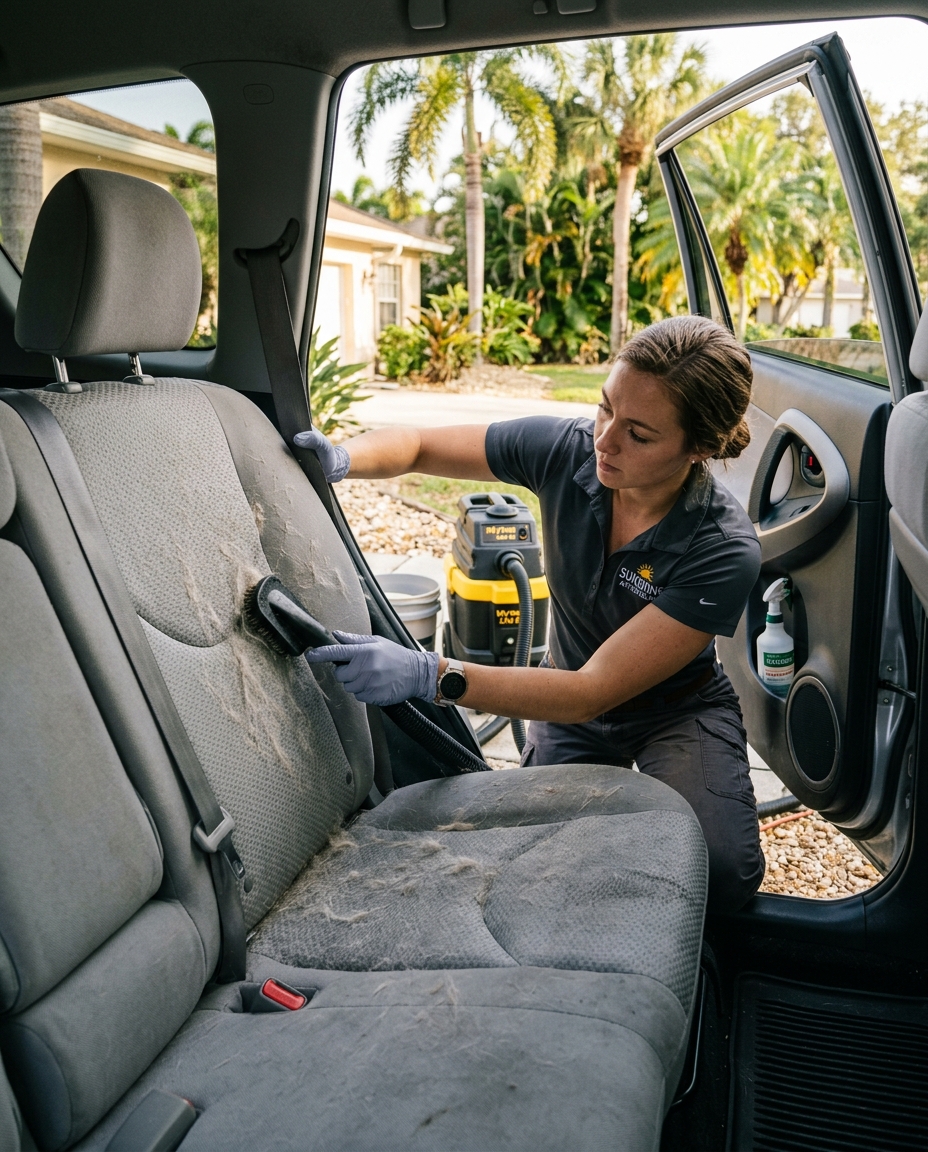
If you have a dog or a cat that rides with you, you already know the frustration. You vacuum the back seat, the carpet, the floor mats — and a week later the pet hair looks exactly the same. You didn't miss spots. The vacuum just isn't built for this.
Why Pet Hair Is Different From Regular Debris
Sand and crumbs sit on top of carpet fibers. A decent vacuum handles those fine. Pet hair doesn't sit on anything — it works its way down into the carpet pile, weaves into cloth seat fabric, and gets carried by static charge up into the headliner and into the gaps around the seat base. Once it's embedded, suction alone won't pull it back out.
The longer it stays, the worse it gets. Foot traffic presses it deeper. Heat from the Florida sun charges the fabric and makes the hair cling harder. A vacuum can lift the surface layer and make things look better for a few days, but it's not getting down where most of the hair actually lives.
The Beach Sand Problem Makes It Worse
On the Space Coast, pet hair and beach sand tend to ride together. Sand is fine and heavy — it drops to the bottom of the carpet pile quickly. A standard vacuum often pushes it around rather than pulling it up, especially in the corners behind the seat rails and under the mat edges where it collects deepest.
Combined with embedded hair, you end up with a layer of abrasive material slowly grinding into the carpet base every time someone steps in or adjusts a seat. Over a few years it breaks down carpet fibers and creates that worn, matted texture that's hard to reverse.
What Actually Gets Pet Hair Out
There are two things that work where vacuums don't: rubber and extraction. Rubber pet hair removal tools — the kind with a squeegee-style or rubber-bristle head — use static friction to pull hair up out of the carpet pile. You drag them against the carpet grain, the hair bunches up on the surface, and then the vacuum can actually remove it. This step gets skipped in most home cleanups because most people don't own the tool.
Wet extraction goes further. The extractor forces hot water or steam into the carpet and seat fabric, agitates the fibers, and pulls the loosened material back out. It reaches the embedded hair and dander that has been pressed in over months. After extraction, the carpet has a depth and loft to it that dry vacuuming can't restore.
The Odor Side of This
Pet dander, saliva, and — if the car has been sitting closed in Brevard's afternoon heat — a dog that got rained on are the main sources of that lingering smell most people can't pin down. The smell isn't on the surface. It's in the fibers. Spraying a deodorizer over the top only masks it for a day or two.
Getting rid of it means getting the material that causes it out of the fabric. That's an extraction job. Ozone treatment can help afterward, but running it on a car that's still loaded with pet hair and dander treats the symptom. The source has to come out first.
When It's Worth Calling a Pro
If you've vacuumed a few times and the hair keeps coming back, it's not that you're doing it wrong — you've hit the limit of what suction can do. A professional interior detail uses the rubber tools, the extractor, and steam where needed to pull out what a regular vacuum leaves behind.
We handle this regularly for customers across Palm Bay, Melbourne, Cocoa Beach, Merritt Island, and the rest of Brevard — and in Fellsmere. We come to your home or office, bring everything we need, and do the work where your car is parked. If pet hair and embedded sand have been building up in your vehicle, call (321) 381-0091 to book a detail.